Home Invasion Tactics, Part C: The Driveway, the Garage, and the Online Sale
By Larry Betz | Prepared Not Paranoid https://www.preparednotparanoid.com/
The most dangerous moment at home is often the moment you get there. Your hands are full, your mind is already inside, and the garage door is wide open behind you. A driveway ambush doesn't need a story or a fake uniform. It just needs you distracted for a few seconds.
Opportunity and Ambush
Part 2 covered how criminals pick a home. Part 3 covered the stories they tell at the door. This is Category 3: opportunity and ambush. The criminal has spotted an opening and is waiting to use it, usually while you're moving between your car and your house.
Security professionals call those in-between areas transitional spaces: the driveway, the garage, the walkway, the front step. They're the places where we relax too early.
Tactic 1: The New Arrival (The Driveway and Entry Ambush)
What it is: A criminal times an attack for the moment the garage door goes up or the front door opens, while you're busy with keys, groceries, or kids. It can be random, or it can be someone who followed you home.
Why it works: Your hands are full, your attention is split, and an open door is a straight path into your home, with you in it.
Quick wins:
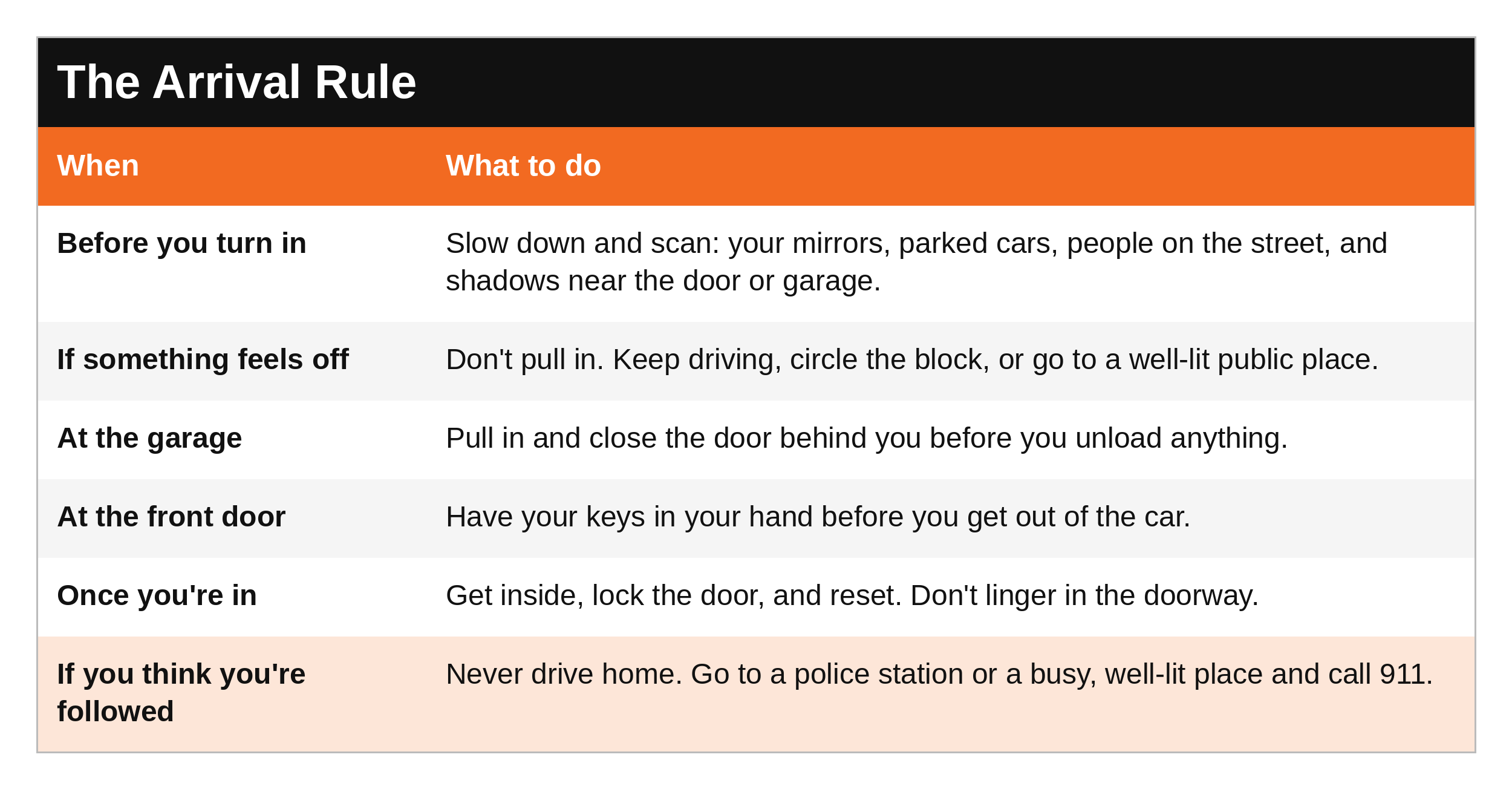
Keys in your hand before you get out of the car.
Don't sit in the driveway finishing a call or scrolling. Get inside and lock the door.
Close the garage door before you start unloading.
Be especially alert after shopping, a bank visit, or a trip to the ATM.
If You Think You're Being Followed
Never lead someone to your home. Don't turn into your driveway or neighborhood. Keep driving, make a few turns a normal driver wouldn't make, and head to a police station, a fire station, or a busy, well-lit place. Call 911 and stay in your car with the doors locked until you're sure it's safe.
Your Arrival Rule
Just like the Door Rule in Part 3, the Arrival Rule is simple enough that everyone in your family can use it every time.
Here it is, step by step.
Tactic 2: The Marketplace Setup (The Fake Sale or Meetup Robbery)
What it is: On Facebook Marketplace, Craigslist, and OfferUp, people give a complete stranger their address, their schedule, and sometimes the layout of their home before they ever meet. A buyer asks to see the item inside, a fake seller lures someone to a house, or someone tests your doors while "picking up" an item. More and more incidents also happen during the meetup itself.
Why it works: It feels like a routine transaction, so we hand over information without thinking.
A note on Safe Exchange Zones: Many police departments now have marked, camera-watched spaces for these meetups. Using one is a good habit. It's not a guarantee. Robberies have still happened at and near these zones, so stay aware there too.
Here's how to make a meetup safer.
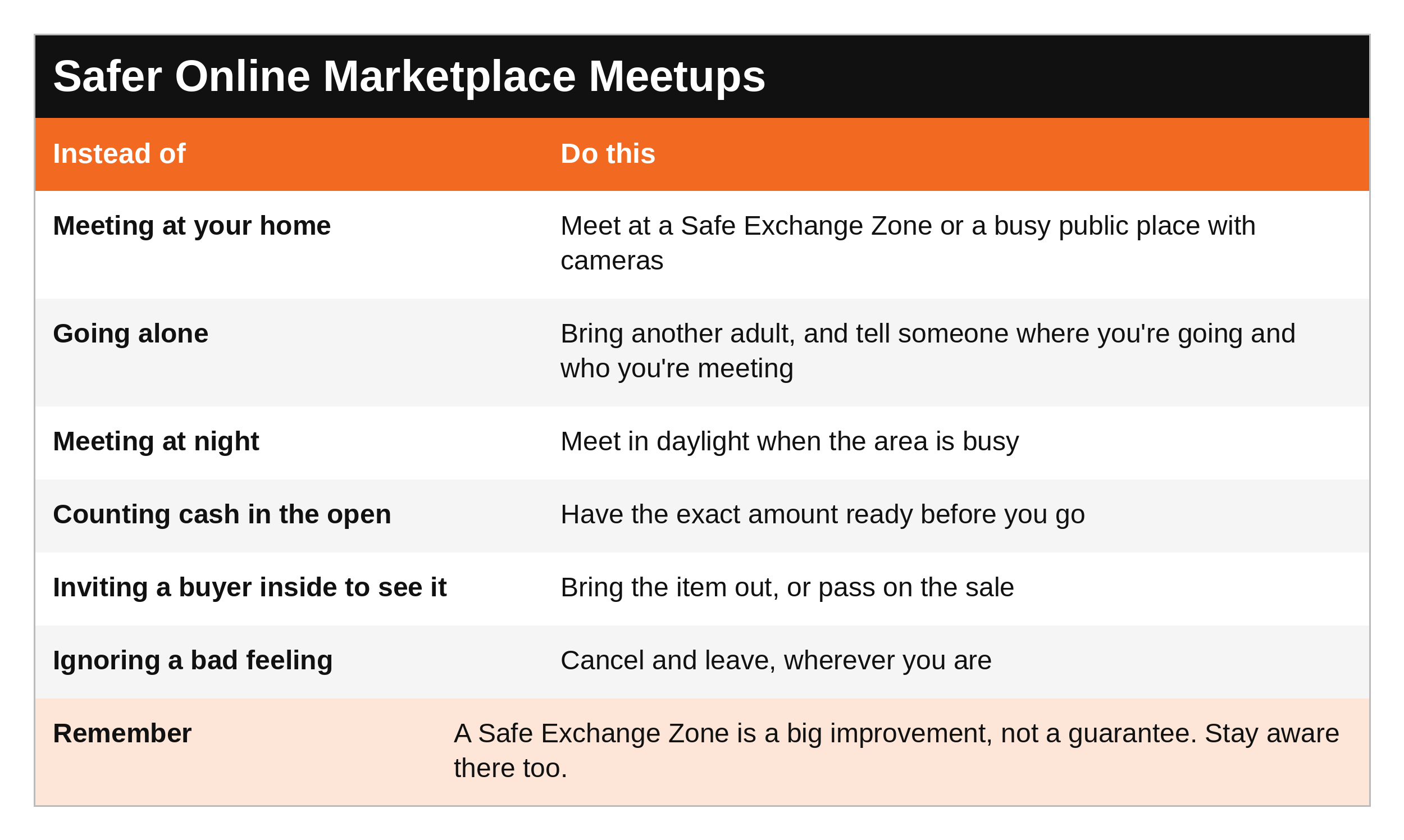
Treat every sale as a meeting with a stranger, no matter where it happens.
Tactics 3 and 4: Your Car and Your Garage
Police recorded about 710,000 motor vehicle thefts in 2025, and a car or a garage remote is often the first step into a home.
Here's how each one works and what to do.
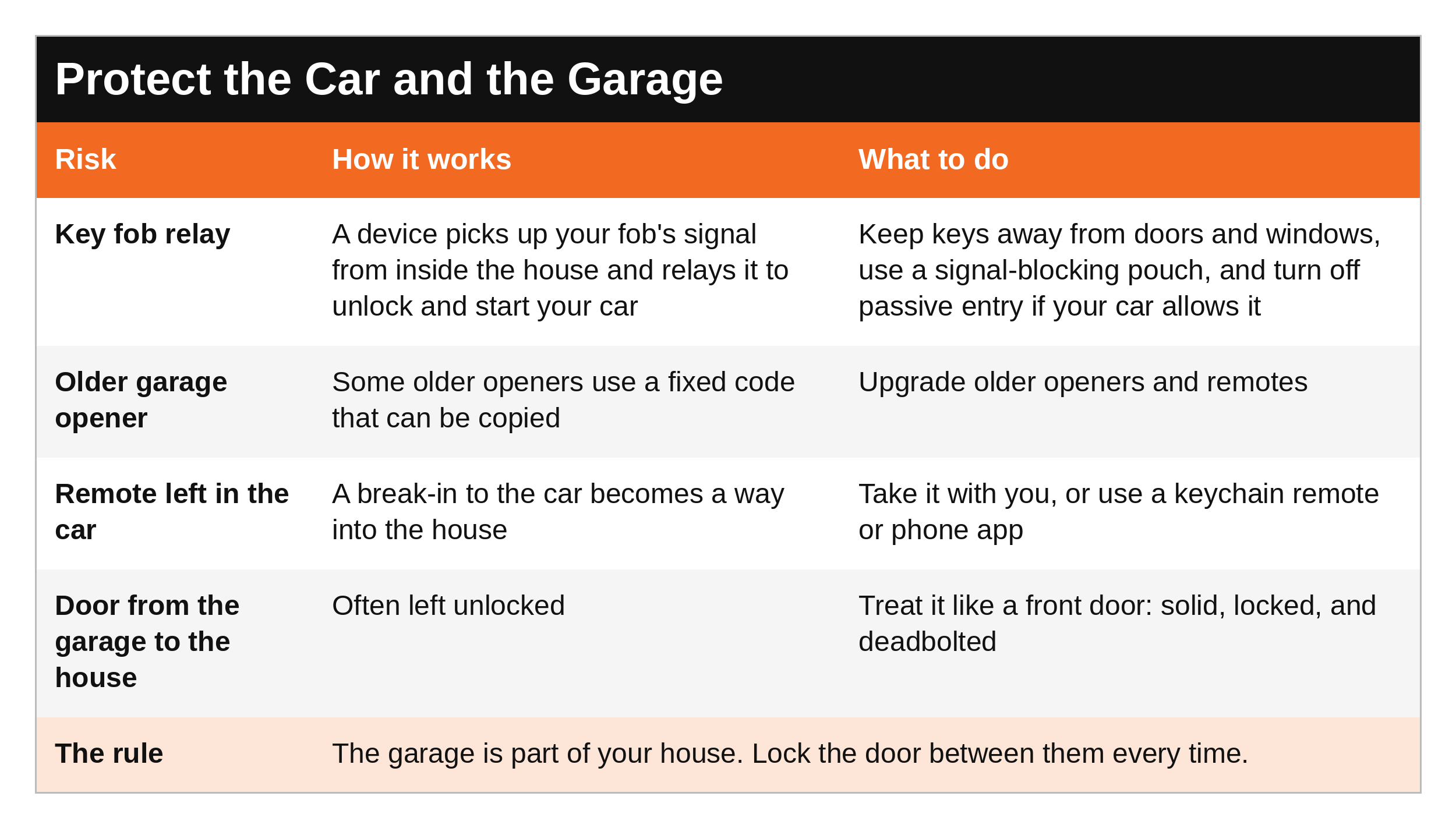
The key fob relay attack. Many newer cars unlock and start when they sense the fob nearby. Thieves can pick up your fob's signal from inside your house and relay it to the car so it thinks the key is right there. Keep your keys away from exterior doors and windows, or use a signal-blocking pouch.
Garage door code capture. Some older openers use a fixed code that can be copied. Newer openers use rolling codes. But criminals don't need a code if the remote is sitting in the car in your driveway.
The door between the garage and the house is one of the most overlooked doors in any home. Treat it like a front door: solid, locked, and deadbolted, every time.
The garage has more weak spots than most people realize, including one on many doors that can be opened from outside in seconds. The Safest House on the Block covers every one in its garage security chapter.
Be a Good Witness
If you see a break-in or an attack, what you notice in those first moments can make a real difference to police. Keep your own safety first, and never follow anyone.
Here's what to notice.
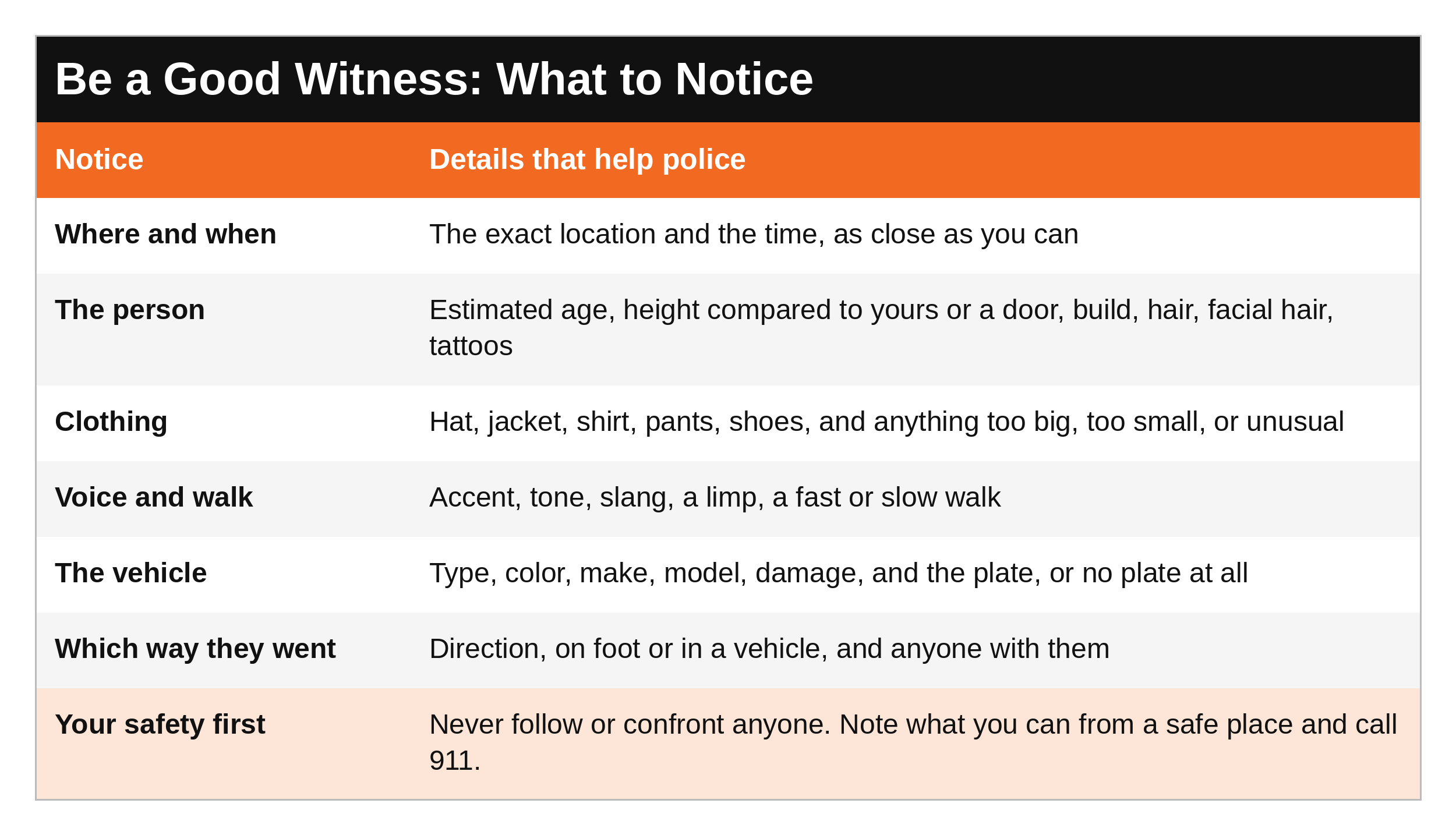
You won't remember everything, and that's fine. Height compared to your own, the color of a jacket, the first three characters of a plate, and which way they went are often enough to help.
[RECOMMENDED DOWNLOAD SPOT: Witness Skills: How to Describe a Suspect (Family Safety Toolkit Checklist 11). Link: LINK]
What to Say
In the driveway, to someone approaching your car:
Safe and non-engaging: Stay in the car, keep the doors locked, and keep the engine running. Don't roll the window down. "Sorry, I can't help." Then drive away.
Setting boundaries: "Stop. Stay back." Say it loud enough for neighbors to hear.
If they persist: Lean on the horn, drive away, and call 911.
To a marketplace buyer who wants to come inside:
"I'll bring it out to you."
"I only meet at the police station's exchange zone."
If they push: "Sorry, it's not going to work out." Then cancel.
The Prepared Protector is someone who's decided that loving someone means being ready for them, not just hoping things go fine. Sometimes that's as simple as keeping the engine running and the doors locked for ten more seconds.
SCAN in the Driveway
S - See your environment. Scan before you turn in. Mirrors, parked cars, people, and shadows.
C - Create space. Keep your car between you and anyone you don't know. Don't open the garage until you're ready to pull in.
A - Act deliberately. Keys ready, pull in, close the door, then unload.
N - Never doubt your gut feelings. If something feels wrong, don't pull in. Drive away and decide from somewhere safe.
Start Your Own SWOT
You've now seen all three kinds of tactics: how criminals pick a home, the stories at the door, and the setups and ambushes. Which ones could work on your house right now? That question is the start of a SWOT analysis: your home's Strengths, Weaknesses, Opportunities, and Threats. We'll build it in Part 11, with a free worksheet to fill in.
Ask Yourself
When I pull into my driveway, do I look around first, or am I already thinking about something else?
Is my garage remote sitting in my car right now?
Where would I go if I thought someone was following me home?
Remember
Criminals don't always create an opportunity. Sometimes they just wait for one. Get home with your keys in hand and your eyes up, close the garage before you unload, meet strangers in public, and never lead anyone to your house.
This post covers setups and ambushes. The Safest House on the Block breaks down every tactic in this series, with the warning signs and prevention steps for each, plus a full chapter on garage security. Next, Part 5: Your Home Online, removing your home's photos from real estate sites.
Get Started Today
Start with the free Home Security Audit. It walks you through your garage door, your locks, your lighting, and the door between your garage and your house, the exact spots these tactics go after. DM the word AUDIT on Instagram or Facebook and I'll send it to you. [Get it here: LINK]
Go Deeper
The Safest House on the Block. This post shows you the driveway, the garage, and the online sale. The book gives you what you won't find on the blog: the full prevention steps for every setup and ambush, a complete garage security chapter (including the weak spot many garage doors have and how to fix it), the full 15-page Home Security Audit, and a step-by-step family security plan with a SWOT analysis for your own home. [Get it here: https://www.preparednotparanoid.com/shop/p/safest-house-on-the-block]
Tools I recommend: The signal-blocking pouches, motion lights, video doorbells, and garage security gear I recommend are in my Safest House on the Block Amazon store. https://link.amazon/B0dSfoUkh
Related reading:
The Safest House on the Block, Part 3: The Knock at the Door https://www.preparednotparanoid.com/pnp-library/the-knock-at-the-door
The Safest House on the Block, Part 2: How Criminals Pick a Home https://www.preparednotparanoid.com/pnp-library/home-invasion-tactics
The Safest House on the Block, Part 11: Making a Home Security Plan https://www.preparednotparanoid.com/pnp-library/homeinvasion-homesafetyplan
Mobile Command Center series [LINK]
References
Betz, L. The Safest House on the Block. Prepared Not Paranoid. Chapter 3 (Common Criminal Tactics and Ruses), Chapter 12 (Garage Security), and Appendix A (Witness Skills).
Bureau of Justice Statistics. (2026). Crime known to law enforcement, 2025. U.S. Department of Justice. https://bjs.ojp.gov/library/publications/crime-known-law-enforcement-2025
Your local police department. Ask whether it has a Safe Exchange Zone.
Disclaimer
This article is for general informational and educational purposes only. It is not a substitute for a professional security assessment, legal advice, or guidance from law enforcement. Never follow or confront a suspect. Affiliate disclosure: I've linked to products from my Amazon store that I personally recommend. As an Amazon Associate, I earn from qualifying purchases, at no extra cost to you. Thank you for supporting my work.
If you think you're being followed, don't go home. Drive to a police station or a busy public place and call 911.
Awareness gives you time. Time gives you options.
The Prepared Protector is someone who's decided that loving someone means being ready for them, not just hoping things go fine.
Prepared Not Paranoid. Protecting the Most Vulnerable Among Us.