Strength, Balance, Medications, and the Right Support
By Larry Betz | Prepared Not Paranoid https://www.preparednotparanoid.com/
The best fall prevention for seniors isn't sitting still. It's getting stronger, steadier, and making sure medications, vision, feet, and support are all working for them instead of against them.
When families find out a parent is at risk of falling, their first instinct is often to tell them to slow down. Stop going up the stairs. Don't carry the laundry. Sit down, Mom.
I understand the instinct. But after more than 20 years of working with older adults in the gym, I can tell you it often backfires. Inactivity makes people weaker, and weaker people fall more.
The goal isn't to stop moving. The goal is to move better.
In Part 1, we covered why falls happen and how to spot the risk early. Now let's work on the person: strength, balance, medications, vision, feet, and the right support.
Strength and Balance: The Foundation of Fall Prevention for Seniors
Exercise is one of the best-supported ways to prevent falls. In 2024, the U.S. Preventive Services Task Force recommended exercise for adults 65 and older who are at increased risk of falling, and the most effective programs combine balance, strength, and functional movement. Some also include walking or Tai Chi.
What to Train
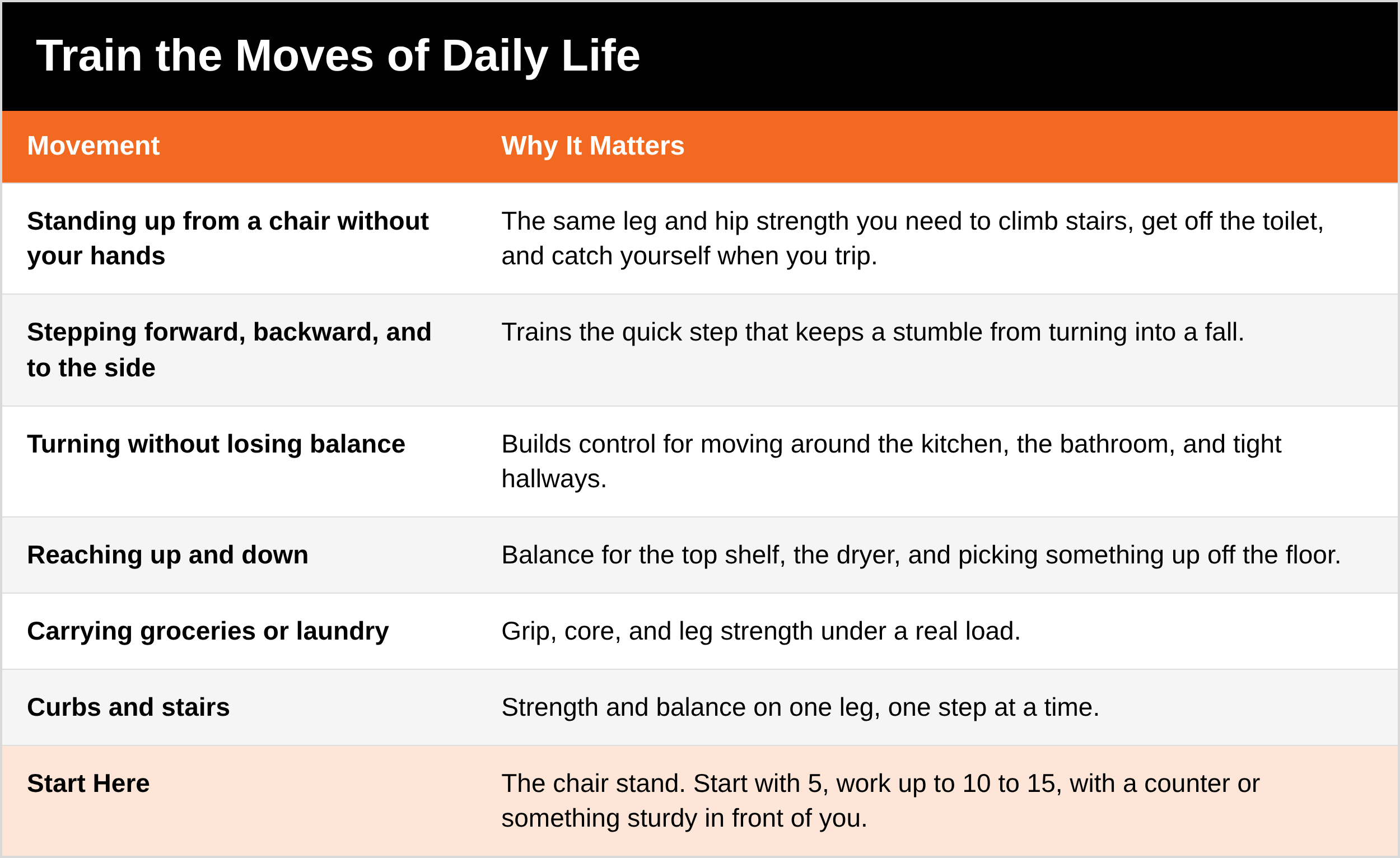
Train the movements of daily life:
Standing up from a chair without using your hands
Stepping forward, backward, and to the side
Turning without losing balance
Reaching up and down
Carrying groceries or laundry
Curbs and stairs
How to Do It Safely
Start where you are. Choose activities that fit current ability and health conditions.
Progress gradually. Balance work should be a little challenging, but always with something sturdy to hold, someone nearby, or professional guidance.
Walking is great, but it isn't enough. Most people also need strength and balance training to really lower their risk.
Get professional help after a recent fall, with major weakness, a neurological condition, pain, or serious balance problems. A physical therapist or a qualified exercise professional who works with older adults can build a safe plan.
Look for proven community programs. Many senior centers and Area Agencies on Aging offer evidence-based classes such as A Matter of Balance, Tai Chi for Arthritis and Falls Prevention, and Stepping On. To find one near you, call the Eldercare Locator at 1-800-677-1116 or visit eldercare.acl.gov.
For six simple balance exercises at the kitchen counter and a 12-week walking plan, see Walking and Balance for Seniors [LINK].
One Exercise to Start With: The Chair Stand
If I could give every older adult one exercise, it would be this one. Getting up from a chair uses the same leg and hip strength you need to climb stairs, get off the toilet, and catch yourself when you trip. It's so useful that doctors use a version of it, the 30-Second Chair Stand Test, to check fall risk.
How to do it:
Use a sturdy chair with no wheels, pushed against a wall so it can't slide. Have a counter or another sturdy surface in front of you.
Sit near the front of the seat, feet flat and about hip-width apart.
Lean forward slightly, "nose over toes," and stand up all the way.
Pause, then sit back down slowly, with control. Don't drop into the seat.
Start with 5 repetitions. Work up to 10 to 15 over the next few weeks.
Make it easier: use your hands on the armrests to help.
Make it harder: cross your arms over your chest, or slow down the lowering part.
Stop if you feel dizzy, short of breath, or have pain, and check with your doctor or physical therapist before starting if you've recently fallen or had surgery.
Don't Let Fear Win
After a fall, it's natural to want to avoid activity. But long periods of inactivity cost strength and confidence. Ask a professional how to safely get moving again.
The Prepared Protector doesn't take away the stairs. They help build the legs to climb them. Protecting someone you love means helping them stay capable, not making their world smaller.
Beyond Exercise: Medications, Vision, Feet, and Support
Review the Medications
Many falls are linked to medications, especially when a person takes several of them.
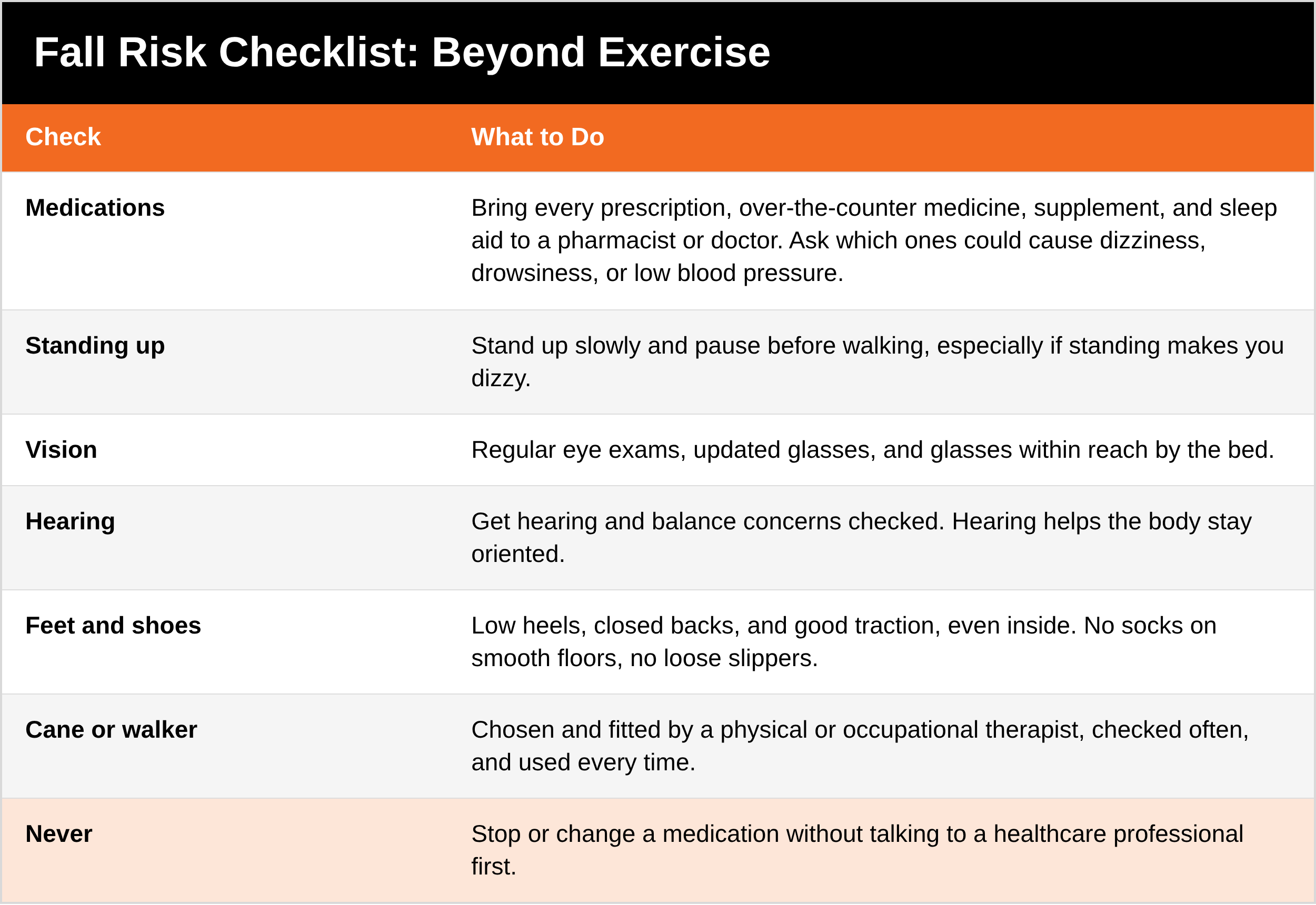
Bring everything to a pharmacist or doctor: every prescription, over-the-counter medicine, sleep aid, supplement, and "as needed" pill
Ask: "Could any of these cause dizziness, drowsiness, blurred vision, slow reactions, low blood pressure, or confusion?"
Report new symptoms after a new prescription or a dose change
Stand up slowly and pause before walking, especially if standing up causes dizziness
Don't stop or change a medication without talking to a healthcare professional first
Look at the whole picture: hydration, nutrition, sleep, pain, nighttime bathroom trips, and alcohol
Protect Vision and Hearing
Regular eye exams, and updated prescriptions
Mention problems with depth perception, glare, night vision, or bifocals on stairs
Keep glasses clean and within reach, especially by the bed
Get hearing and balance concerns checked. Hearing helps the body stay oriented.
Take Care of the Feet
Shoes with low heels, closed backs, and good traction, even inside the house
Replace worn soles
No walking in socks on smooth floors, and no loose, backless slippers
Address foot pain, numbness, wounds, and nail problems. A podiatrist can help.
Get the Right Cane or Walker
A cane or walker only helps if it's the right one, fitted correctly, and used every time. A borrowed cane at the wrong height can make things worse.
Have a physical or occupational therapist choose and fit it when possible
Check it regularly: rubber tips, brakes, wheels, seats, folding locks, and grips
Keep everyday items within reach, so the walker doesn't get left behind
Practice the hard parts: getting in and out of the car, curbs, stairs, and getting up from a chair
Never lean on towel bars, furniture, or rolling chairs for support
Ask Yourself
Is my parent doing any strength or balance training, or just walking?
When did they last have a full medication review with a pharmacist?
Are they wearing safe shoes inside the house?
5 Quick Wins You Can Start Today
Do 5 chair stands today, with a counter in front of you and someone nearby.
Put every medication and supplement in one bag and take it to the pharmacist for a review.
Check the shoes they wear around the house. Swap loose slippers for closed-back shoes with traction.
Put a pair of glasses and a light within reach of the bed.
Call the Eldercare Locator (1-800-677-1116) and ask about A Matter of Balance or Tai Chi classes nearby.
Remember: The best fall prevention plan doesn't stop people from moving. It helps them move with strength and confidence.
Coming Up in Part 3
A Safer Home, Room by Room. We'll walk through the house, fix the hazards, and make a plan for what to do if a fall happens.
Get Started Today
My free Senior Fall Prevention and Emergency Information Checklist includes the health, medication, and footwear questions to work through together.
DM the word [KEYWORD] on Instagram or Facebook and I'll send it to you. [Get it here: LINK]
Go Deeper
The Family Safety Toolkit includes Senior Safety checklists for fall prevention and fraud prevention. This post covers the person. The Toolkit gives you the checklists to work through the health, habits, and home together, and keep track of what's done. [Get it here: LINK]
Coming soon: the Senior Safety Guide. A full strength and balance program for older adults, medication safety and review tools, how to choose and fit a cane or walker, fall-detection devices, and how to help a parent get moving again after a fall.
Tools I recommend: supportive shoes, sturdy chairs, pill organizers, night lights, and the walking sticks I use myself, all in my Senior Safety store. [SENIOR SAFETY STORE LINK]
The Full Series
Part 1: Falls Aren't a Normal Part of Aging [LINK]
Part 2: Strong, Steady, and Independent (you are here)
Part 3: A Safer Home, Room by Room [LINK]
Related Reading
Walking and Balance for Seniors [LINK]
Strength Part 3: Lower Body and Core [LINK]
Mobility Part 3: Movement Prep and Self Care [LINK]
Red Cell Your Family, Part 7: Just in Case (physical capability is part of the plan) [LINK]
References
U.S. Preventive Services Task Force, Falls Prevention in Community-Dwelling Older Adults: Interventions (2024): https://www.uspreventiveservicestaskforce.org/uspstf/recommendation/falls-prevention-community-dwelling-older-adults-interventions
CDC, STEADI Patient and Caregiver Resources (including the 30-Second Chair Stand): https://www.cdc.gov/steadi/
National Council on Aging, Evidence-Based Falls Prevention Programs: https://www.ncoa.org/article/evidence-based-falls-prevention-programs
National Institute on Aging, Falls and Falls Prevention: https://www.nia.nih.gov/health/falls-and-falls-prevention
Administration for Community Living, Eldercare Locator: https://eldercare.acl.gov
Disclaimer: This article is for general informational and educational purposes only. It is not medical advice. Talk to a doctor or physical therapist before starting a new exercise program, especially after a fall, surgery, or illness. Never stop or change a medication without professional guidance. These suggestions are intended to help you and your family build awareness, confidence, and safer decision-making habits. No safety plan, checklist, or training can guarantee 100% protection. Programs and services vary, so check your state and county for what's available where you live. As an Amazon Associate, I earn from qualifying purchases.
If someone has fallen and is badly hurt, has hit their head, or can't get up safely, call 911.
Awareness gives you time. Time gives you options.
The Prepared Protector is someone who's decided that loving someone means being ready for them, not just hoping things go fine.
Prepared Not Paranoid. Protecting the Most Vulnerable Among Us.