Where They Hide, What the Research Says, and How to Cut Your Exposure (2026)
By Larry Betz | Prepared Not Paranoid https://www.preparednotparanoid.com/
Everyone wants to know how to get microplastics out of their body. The internet is full of detox products and clinics that promise to clean your blood. Some of the research is real and interesting. None of it is proven yet.
Here's the good news: the strategy that works is the one you already control. Most of your exposure comes from a few daily habits: what you drink, what you heat your food in, and the dust in your home. Change those, and you lower your family's exposure every single day.
Microplastics: What You Need to Know
Microplastics are tiny plastic particles less than 5 millimeters in size, about the size of a sesame seed or smaller. Particles smaller than 1 micrometer, far too small to see, are called nanoplastics. They come from larger plastic items that break down over time, as well as from microbeads intentionally added to products. These particles are now everywhere: in the air we breathe, the water we drink, the food we eat and even inside our bodies.
Where Are Microplastics Found?
Microplastics are alarmingly widespread. Common sources include:
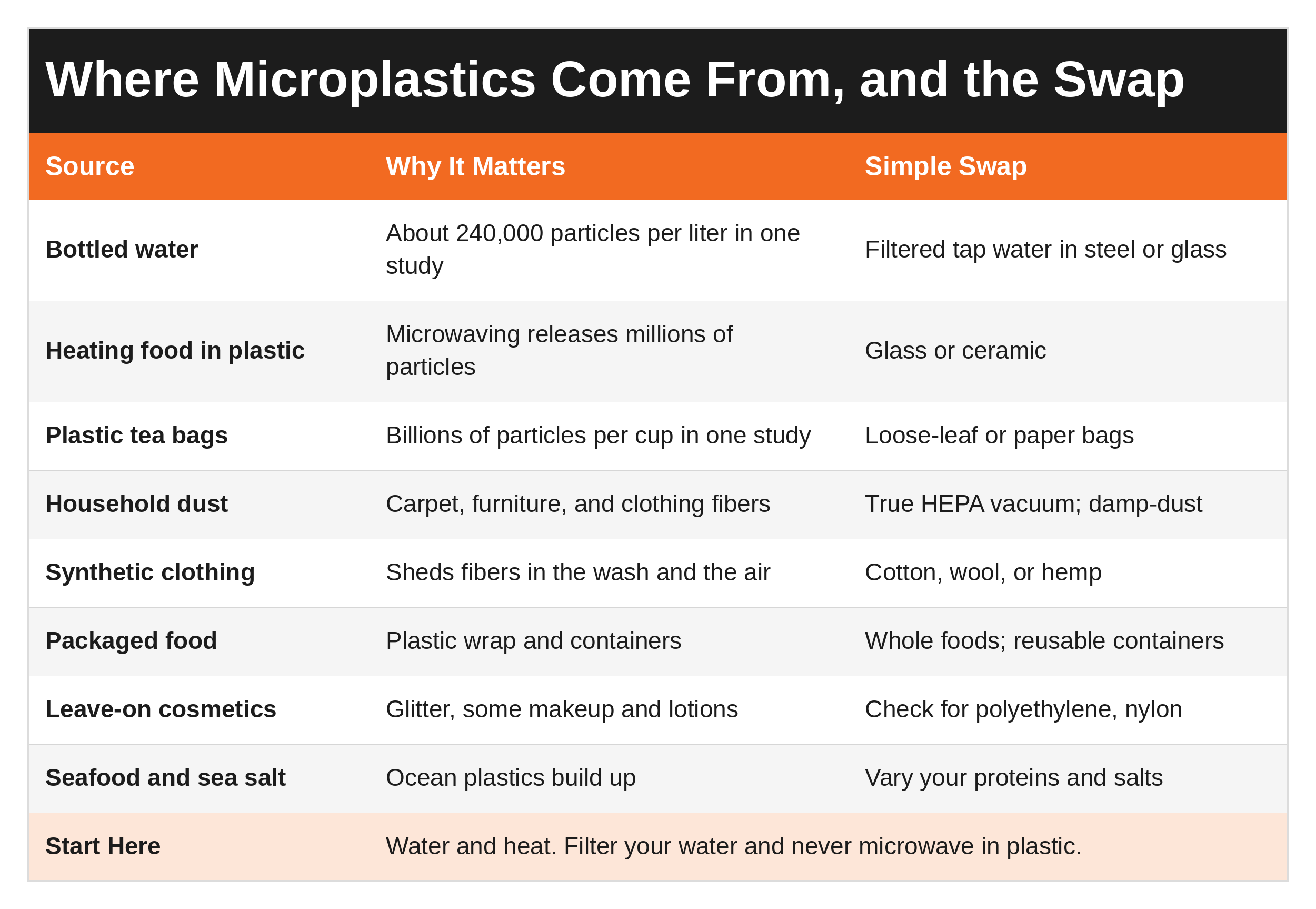
Bottled water and tap water. In 2024, Columbia University researchers found about 240,000 tiny plastic particles in an average liter of bottled water, and about 90 percent were nanoplastics, small enough to enter cells.
Seafood (especially shellfish and fish that consume microplastics in the ocean)
Salt (particularly sea salt)
Tea bags (especially nylon or plastic mesh ones). A 2019 McGill University study found a single plastic tea bag released billions of micro- and nanoplastic particles into the cup.
Food containers and wrappers, especially when heated
Cosmetics and exfoliants (with microbeads)
Laundry lint from synthetic clothing like polyester and nylon
Household dust (from furniture, clothing, carpet, and packaging)
They've even been detected in placenta, lungs, and bloodstream in scientific studies. This shows just how deeply embedded this problem has become. One 2024 study in the New England Journal of Medicine found that people with microplastics in their artery plaque had a higher risk of heart attack, stroke, or death over about three years. That shows a link, not proof of cause.
An honest note on the science: in January 2026, a group of scientists questioned how several high-profile studies measured plastic in human tissue, including the artery and brain studies. Measuring particles this small is hard, and some lab methods can mistake body fat for plastic. Plastic pollution is real. How much ends up in our organs, and what it does there, is still being worked out.
Good to know: the U.S. banned plastic microbeads in rinse-off products like face scrubs and toothpaste in 2015. Plastic can still show up in leave-on products like makeup, glitter, and some lotions.
What Microplastics Do to the Body
While research is still ongoing, early studies raise serious concerns of:
Inflammation and oxidative stress due to the body's response to foreign particles
Hormonal disruption, as microplastics often carry endocrine-disrupting chemicals (like phthalates and BPA)
Cell damage, particularly in gut and immune system cells
Possible links to cancer and fertility issues, based on animal studies and early human data
Because microplastics can absorb toxic chemicals and carry them into the body, they may act as delivery systems for other contaminants as well. (For more on those chemicals, see Part 5: Endocrine Disruptors.)
How to Avoid Microplastics
While complete avoidance is nearly impossible, there are effective ways to drastically reduce your exposure:
Use a water filter certified to reduce microplastics. Look for NSF/ANSI 401 certification that lists microplastics, or a certified reverse osmosis system.
Avoid plastic water bottles, opt for stainless steel or glass containers
Don't microwave, store, or freeze food in plastic. A 2023 study found that microwaving plastic food containers released millions of microplastics and billions of nanoplastics from each square centimeter of plastic in just three minutes.
Reduce packaged and processed foods, especially those wrapped in plastic
Use reusable cloth bags, containers, and beeswax wraps instead of plastic
Choose loose-leaf tea or paper tea bags over plastic mesh bags
Choose clothing and bedding made from natural fibers like organic cotton, wool, or hemp
Avoid personal care products with microbeads, check the label for ingredients like polyethylene or polypropylene
Vacuum with a HEPA filter and regularly dust your home to reduce microplastic-laden household dust
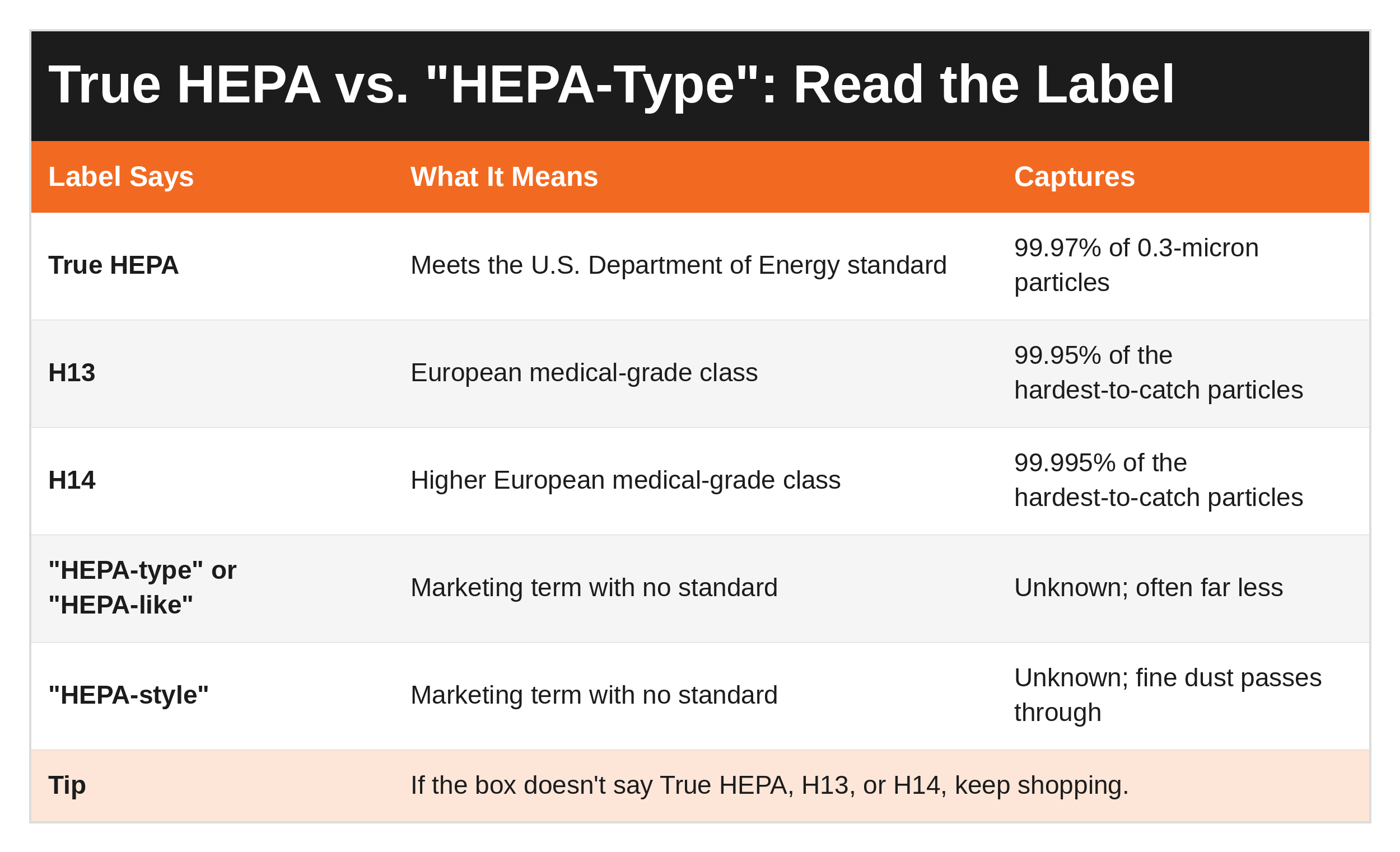
NOTE: To effectively reduce microplastics in your home, it's important to use a vacuum and air filter equipped with a True HEPA filter, not just one labeled as "HEPA-type" or "HEPA-like." True HEPA (High-Efficiency Particulate Air) filters are designed to capture 99.97% of particles 0.3 microns in size, which includes microplastics, synthetic fibers, and fine dust that commonly accumulate in household environments. For even greater filtration, especially in allergy-sensitive homes, medical-grade HEPA filters like H13 or H14 can trap 99.95% to 99.995% of ultrafine particles, offering exceptional protection.
This distinction matters because many low-cost vacuums and purifiers advertise "HEPA-style" filters that fall far short of the official HEPA standard. These knockoffs may only capture larger particles and allow finer contaminants, like microplastics, to pass through and recirculate into your living space. Microplastic dust can originate from synthetic carpets, furniture, packaging, and even clothing, making it critical to vacuum and dust regularly using equipment that truly filters the air.
By investing in a high-quality HEPA-rated vacuum and air purifier, you can significantly reduce your exposure to airborne microplastics and support a cleaner, healthier home environment.
Can You Get Microplastics Out of Your Body? What the Research Says Right Now
There's currently no guaranteed "microplastic detox." But the research is moving fast, and you'll see headlines about it. Here's each approach, what was studied, and what it does and doesn't prove.
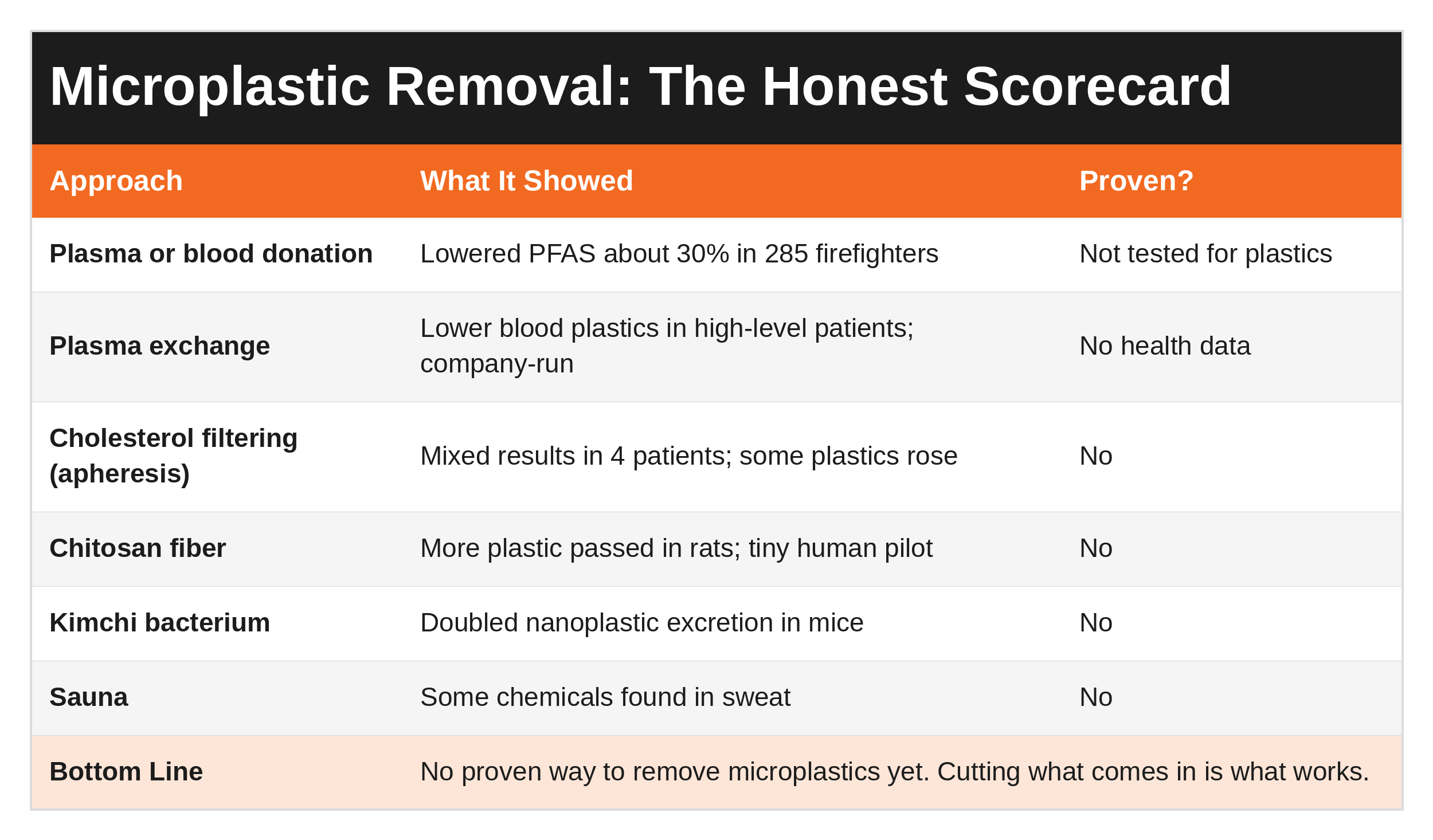
Blood and plasma donation: proven for PFAS, not tested for microplastics. In a 2022 trial, 285 Australian firefighters with high PFAS levels were assigned to donate plasma, donate blood, or neither for a year. Plasma donation lowered PFAS levels by about 30 percent compared with no donation. The study didn't test microplastics at all. If you're eligible, donate because people need it, not as a detox plan, and talk with your doctor first if you have anemia, a heart condition, or are pregnant.
Therapeutic plasma exchange: early results, big price tag, no health data. In 2026, the Journal of Clinical Apheresis published the first attempt to remove microplastics from human blood. In 114 patients, people who started with the highest levels saw counts drop by roughly 60 percent after one treatment. People with low levels sometimes went up, likely from the plastic tubing and bags used in the procedure. The study was run by a company that sells the treatment, which costs about $5,000 to $8,000 per session. It measured blood only, not tissue, and didn't track whether anyone's health improved.
Cholesterol filtering: mixed results. An August 2026 study looked at a blood-filtering treatment used for high cholesterol. It lowered some PFAS, but microplastic results in four patients were mixed, and some plastics went up.
Fiber and chitosan: promising in rats, very early in people. In a 2025 study in Japan, rats given chitosan, a fiber made from shellfish shells, passed more microplastics in their stool. A tiny 2025 pilot in Italy with 10 adults found something similar, but it had no comparison group and the authors had filed a related patent. If you have a shellfish allergy, don't take chitosan. It can also block some vitamins and medications, so talk with your doctor first. Even without chitosan, a high-fiber diet has proven benefits for your gut, heart, and blood sugar.
A kimchi bacterium: one mouse study. In 2026, Korean researchers found that a bacterium from kimchi grabbed onto nanoplastics, and mice given it passed more than twice as many in their stool. That was one type of plastic, in specially raised mice, with no human data. Fermented foods are good for your gut for many reasons. Just don't expect a probiotic to clear plastic yet.
Sauna and sweating: emerging evidence. I'm a big believer in the sauna for its overall health benefits. Small studies have found BPA and phthalates in sweat, which suggests sweating may help clear certain chemicals. No study has shown that a sauna removes microplastics. Start with short sessions, drink plenty of water, and talk with your doctor first if you're pregnant, have heart disease or low blood pressure, or take medications that affect heat tolerance.
The Honest Bottom Line
Right now, there is no proven way to remove microplastics from your body.
Here's how every approach stacks up.
Until the research catches up, cut what comes in. Every bottle, plastic container, and dust bunny you eliminate is exposure you never have to undo.
Supporting your body's natural detox systems still makes sense while you limit further buildup:
Eat more fiber (promotes healthy bowel movements, which help eliminate contaminants)
Stay hydrated to support kidney and liver function
Eat antioxidant-rich foods (berries, leafy greens, turmeric, green tea) to combat inflammation
Support gut health with probiotics and prebiotics
Use Far infrared saunas (sweating may help eliminate certain toxins, though data is still emerging)
More research is needed, but reducing exposure while supporting detox pathways is the best strategy for now.
Microplastics and Your Emergency Supplies
The CDC calls commercially bottled water the safest emergency water supply, and food-grade plastic containers are the most practical way to store large amounts. That's the right call for emergencies. Just store water cool and dark (heat speeds up what plastic sheds, and here in Arizona that means never in a hot garage or car), rotate it on schedule, and drink filtered tap water from glass or steel the rest of the time. Use plastic where it keeps your family safe, and skip it everywhere else.
Ask Yourself
Where does most of my family's plastic exposure come from: our water, our food containers, or our home?
Do I heat or store hot food in plastic out of habit?
Does my vacuum say True HEPA, or just "HEPA-type"?
If I saw an ad for a "microplastic detox," would I know what questions to ask?
Remember
The Bottom Line: Microplastics are a silent but serious health threat. While you can't avoid them completely, small changes in your shopping habits, food choices, and home environment can significantly reduce your exposure, and protect your long-term health.
Get Started Today
[FREE DOWNLOAD: TO BE CHOSEN AFTER THE BINDER REVIEW]
Go Deeper
The Prepared Not Paranoid Family Nutrition Guide. This post shows you where microplastics come from and what the research says. The guide adds the certified water filters that remove microplastics and PFAS, the full exposure checklist, how to test your tap water, and the "Ingredients to Avoid" wallet card. The research is moving fast, and guide owners get free updates as new studies come out. [Get it here: LINK]
Tools I recommend: The certified water filters, stainless steel bottles, glass food storage, and True HEPA vacuum and air purifier I recommend are in my Amazon store. https://amzn.to/4yM747h
Related reading:
Toxic Chemicals to Avoid: Introduction https://www.preparednotparanoid.com/pnp-library/toxic-chemicals-intro
Toxic Chemicals to Avoid, Part 5: Endocrine Disruptors https://www.preparednotparanoid.com/pnp-library/toxic-chemicals-lesson-1-9axkp-mxse9-ekwcw
Toxic Chemicals to Avoid, Part 7: Tools Like Yuka That Do the Work for You (coming soon)
References
Qian N, et al. Rapid single-particle chemical imaging of nanoplastics by SRS microscopy. Proceedings of the National Academy of Sciences, January 2024.
Hernandez LM, et al. Plastic teabags release billions of microparticles and nanoparticles into tea. Environmental Science and Technology, 2019.
Hussain KA, et al. Assessing the release of microplastics and nanoplastics from plastic containers and reusable food pouches. Environmental Science and Technology, 2023.
Marfella R, et al. Microplastics and nanoplastics in atheromas and cardiovascular events. New England Journal of Medicine, 2024.
ConsumerAffairs. Scientists question high-profile microplastics studies after contamination concerns. January 13, 2026. https://consumeraffairs.com/news/scientists-question-high-profile-microplastics-studies-after-contamination-concerns-011326.html
Microbead-Free Waters Act of 2015, Public Law 114-114.
U.S. Department of Energy. Specification for HEPA Filters (DOE-STD-3020); European Standard EN 1822 (H13 and H14).
Gasiorowski R, et al. Effect of plasma and blood donations on levels of PFAS in firefighters in Australia: a randomized clinical trial. JAMA Network Open, 2022.
E&E News. Company verifies first microplastics "detox" procedure; results vary. May 2026. https://www.eenews.net/articles/company-verifies-first-microplastics-detox-procedure-results-vary/
ScienceAlert. A common cholesterol treatment may also remove PFAS and microplastics from blood. August 11, 2026. https://www.sciencealert.com/a-common-cholesterol-treatment-may-also-remove-pfas-and-microplastics-from-blood
Casella C, et al. Preliminary study on PCC-chitosan's ability to enhance microplastic excretion in human stools. Foods, 2025.
Lee SH, Whon TW, et al. Efficient biosorption of nanoplastics by food-derived lactic acid bacterium. Bioresource Technology, 2026. Summary: ScienceDaily, September 17, 2026. https://sciencedaily.com/releases/2026/09/260917101058.htm
Genuis SJ, et al. Human excretion of bisphenol A: blood, urine, and sweat (BUS) study. Journal of Environmental and Public Health, 2012.
Centers for Disease Control and Prevention. Creating and Storing an Emergency Water Supply.
Disclaimer
This article is for general informational and educational purposes only. It is not medical advice. Talk with your doctor before trying any supplement, sauna routine, blood donation, or medical procedure, especially if you're pregnant or have a health condition. Affiliate disclosure: I've linked to products from my Amazon store that I personally recommend. As an Amazon Associate, I earn from qualifying purchases, at no extra cost to you. Thank you for supporting my work.
If someone feels faint, confused, or has chest pain in a sauna or after a medical procedure, call 911.
Awareness gives you time. Time gives you options.
The prepared protector is someone who's decided that loving someone means being ready for them, not just hoping things go fine.
Prepared Not Paranoid. Protecting the Most Vulnerable Among Us.