Fire Prevention: Stop Fires Before They Start
By Larry Betz | Prepared Not Paranoid https://www.preparednotparanoid.com/
Updated November 9, 2026
Most home fires start the same few ways, year after year. Here are the habits that stop them, room by room, plus a 10-minute walkthrough you can do tonight.
In Parts 1, 2, and 3, we covered how to detect a fire, how to respond to one, and how to get your family out. All of that matters. But the best fire is the one that never starts.
Safety professionals have a saying: most accidents aren't accidents. They're the result of small, predictable habits and hazards that nobody fixed. I saw it over and over in my years as a Safety Director. Home fires work the same way. The NFPA's data shows the same handful of causes year after year, and nearly all of them come down to everyday habits you can change today.
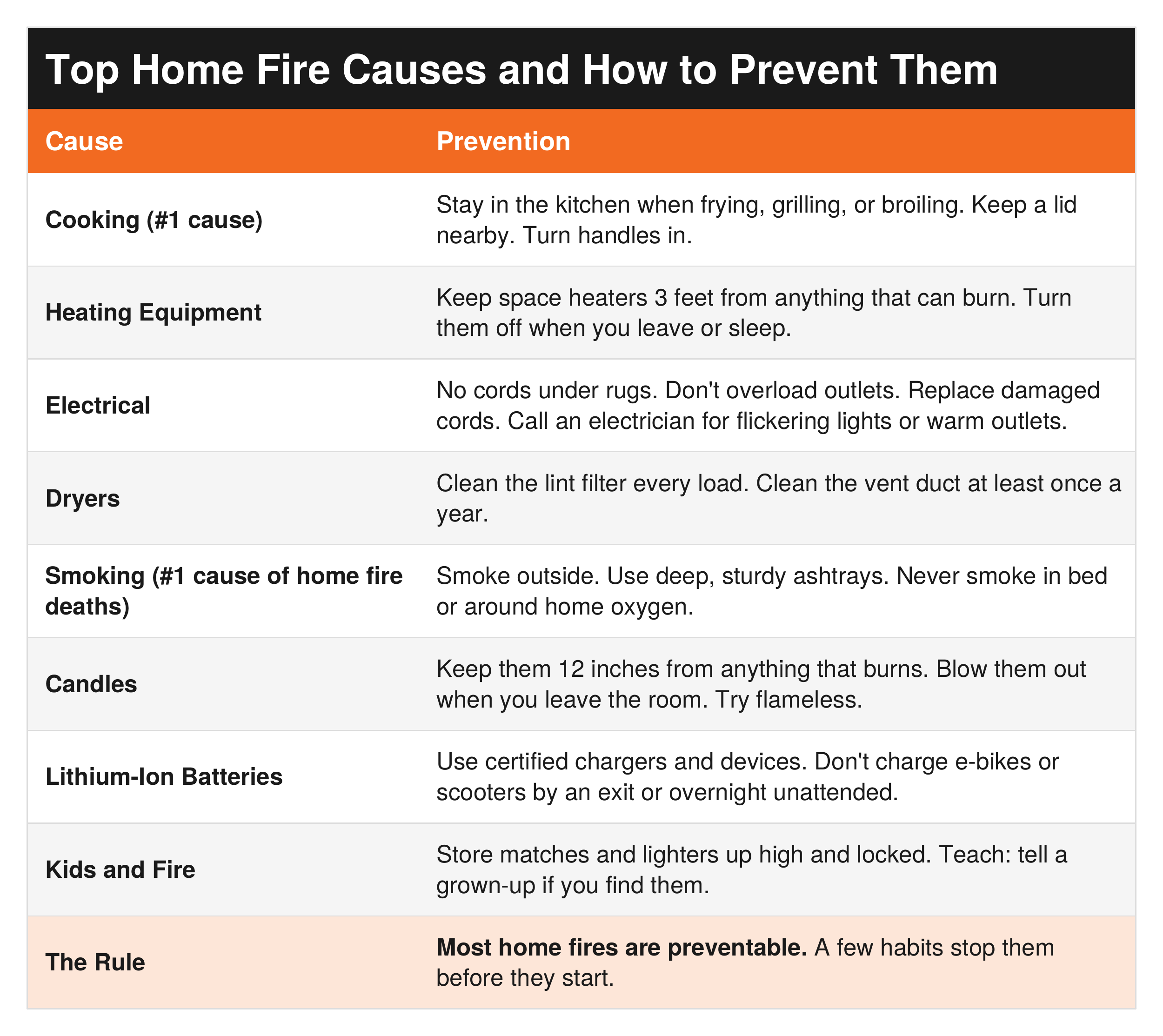
1. Cooking: The #1 Cause of Home Fires
Cooking is the leading cause of home fires and home fire injuries, and unattended cooking is the leading factor.
Stay in the kitchen when you're frying, grilling, boiling, or broiling. If you have to leave, even for a minute, turn off the burner.
Keep a lid or a cookie sheet within reach. If a pan catches fire, slide the lid over it and turn off the heat. Never use water on a grease fire.
Keep anything that can burn away from the stovetop: towels, oven mitts, paper towels, packaging, and wooden utensils.
Turn pot handles in so kids can't grab them and you can't bump them.
Create a 3-foot kid-free zone around the stove and oven.
Oven fire? Turn off the heat and keep the door closed.
Wear short or snug sleeves when cooking. Loose sleeves catch fire easily.
Don't cook if you're drowsy, or if you've been drinking or taking medication that makes you sleepy.
2. Heating Equipment
Heating equipment is the second leading cause of home fires, and space heaters are involved in most heating-related fire deaths.
Keep space heaters at least 3 feet from anything that can burn: bedding, curtains, furniture, clothing, and paper.
Turn them off when you leave the room or go to sleep.
Plug space heaters directly into the wall. Never use an extension cord or power strip.
Choose a heater with automatic shut-off if it tips over, and look for a safety listing (like UL or ETL).
Have your furnace and chimney inspected and cleaned by a professional once a year.
Never heat your home with a gas oven or stove, and never use a grill, camp stove, or generator indoors or in a garage. They can fill your home with carbon monoxide.
Never run a car in an attached garage, even with the garage door open.
Use a sturdy fireplace screen, and let ashes cool completely before disposing of them in a metal container, kept outside and away from the house.
3. Electrical
Don't run cords under rugs or furniture, where they can overheat or get damaged without you noticing.
Don't overload outlets or power strips, and never "daisy-chain" power strips together.
Replace frayed or damaged cords right away.
Use extension cords only temporarily. They're not permanent wiring.
Use the right bulb wattage for every lamp and fixture.
Call a licensed electrician if you notice flickering or dimming lights, outlets that feel warm, a burning smell, or breakers that trip often.
Ask about AFCI protection (arc-fault circuit interrupters), which can shut off power when dangerous arcing is detected.
4. Clothes Dryers
The leading factor in home dryer fires is failure to clean them.
Clean the lint filter before or after every load.
Clean the dryer vent duct at least once a year, more often with heavy use.
Use a rigid or semi-rigid metal vent, not plastic or foil accordion ducts.
Don't run the dryer when you leave home or go to bed.
Keep the area around the dryer clear of boxes, cleaning supplies, and clothes.
5. Smoking: The #1 Cause of Home Fire Deaths
Smoking materials are the leading cause of home fire deaths.
Smoke outside, and use deep, sturdy ashtrays placed away from anything that can burn.
Never smoke in bed, or when you're drowsy or have been drinking.
Wet the butts and ashes before throwing them away.
Never smoke where home medical oxygen is used. Oxygen makes fires burn hotter and faster.
Check furniture cushions and around sofas for cigarette butts after guests leave.
6. Candles
Keep candles at least 12 inches from anything that can burn.
Blow them out when you leave the room or go to sleep.
Use sturdy holders on a stable, uncluttered surface, out of reach of kids and pets.
Never use candles during a power outage. Use flashlights or battery-powered lanterns instead.
Consider flameless LED candles. They give you the look without the risk.
7. Lithium-Ion Batteries
Lithium-ion batteries power our phones, laptops, power tools, e-bikes, and scooters. When they're damaged, cheap, or charged the wrong way, they can overheat, catch fire, or even explode.
Buy devices and batteries certified by a recognized testing lab. For e-bikes, look for UL 2849; for e-scooters, UL 2272.
Use the charger that came with the device, or a certified replacement made for it.
Don't charge overnight or while you're away from home.
Charge e-bikes and scooters away from exits so a battery fire can't block your way out.
Charge on hard surfaces, never on a bed, couch, or pillow.
Stop using a battery that's swollen, hot, leaking, or making noise. Take it to a battery recycling center. Never put lithium-ion batteries in the trash.
If a battery does catch fire, a regular extinguisher won't stop it. Get out, close the door, and call 911. We covered why in Part 2.
8. Kids and Fire
Store matches and lighters up high and locked, out of sight and reach.
Teach kids: "If you find matches or a lighter, don't touch them. Tell a grown-up right away."
Never leave children alone with a lit candle, fireplace, or stove.
9. Seasonal and Outdoor Fire Risks
Grills: Use them outdoors only, well away from the house, deck railings, and overhanging branches. Clean the grease trap. Never leave a lit grill unattended.
Holiday decorations: Water live trees daily, keep them away from heat sources, and use only lights listed for indoor or outdoor use. Turn them off before bed.
Garage and flammables: Store gasoline and propane in approved containers, outside the living space and away from heat sources. Never store propane tanks indoors.
Oily rags from staining or painting can heat up and ignite on their own. Lay them flat outside to dry, or store them in a sealed metal can filled with water.
Living in Wildfire Country
Here in Arizona, a house fire plan and a wildfire evacuation plan are two different things. If you live near open land, start with the "home ignition zone":
0 to 5 feet from your home: Keep it ember-resistant. Remove dead plants, leaves, mulch, and anything that burns. Clear gutters and roofs.
5 to 30 feet: Space out and trim plants and trees, and remove dead vegetation.
30 to 100 feet: Reduce fuel and keep vegetation thinned.
Sign up for your county's emergency alerts, and know your evacuation routes before fire season.
Your 10-Minute Home Fire Walkthrough
Grab a notepad and walk your home tonight:
Kitchen: Is anything that can burn sitting near the stove? Is there a lid nearby?
Living areas: Are space heaters 3 feet from everything? Any cords under rugs?
Laundry: When was the lint filter last cleaned? The vent duct?
Bedrooms: Any chargers on beds? Any overloaded power strips?
Garage: Are fuels and propane stored properly and away from heat?
Outside: Is the area within 5 feet of the house clear of anything that burns?
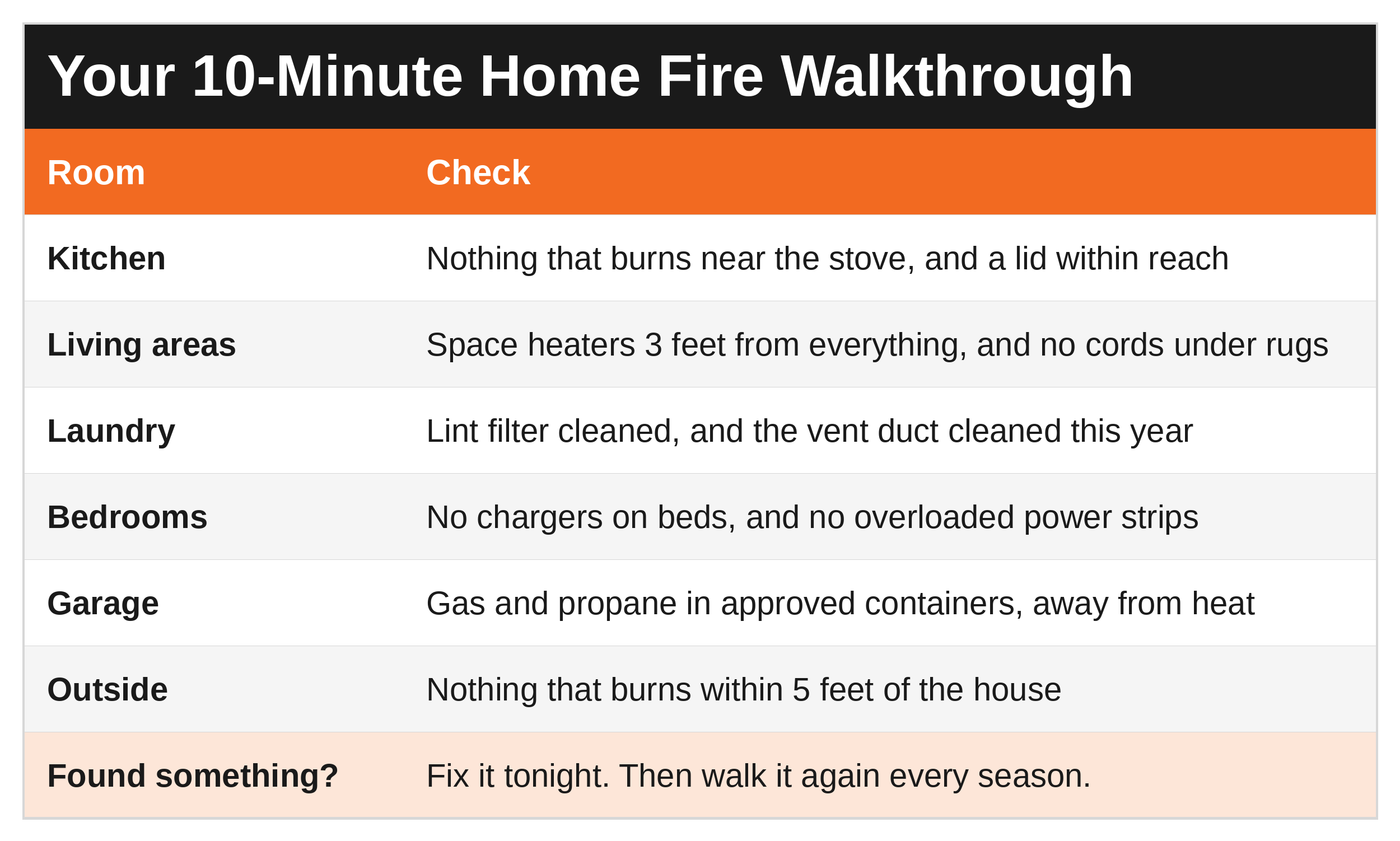
The Prepared Protector fixes the hazard before it becomes a fire. Take 10 minutes tonight and walk your home: the stove, the space heaters, the cords, the dryer, the chargers, and the garage. Fix one thing you find. Then make the walkthrough a habit, every season. The free Family Fire Escape Plan Worksheet makes sure that if a fire does start, everyone knows two ways out and where to meet.
Ask Yourself
If I walked away from the stove right now, would anything catch fire?
Where do we charge our e-bikes, scooters, and power tool batteries?
When was the last time anyone cleaned the dryer vent?
Are the matches and lighters in my home locked up where the kids can't reach them?
Remember
Most home fires are preventable. Stay with your cooking, give heaters space, clean the lint, and charge batteries safely. A few small habits stop most fires before they ever start.
Coming Up in Part 5: Carbon Monoxide
In Part 5, we'll cover carbon monoxide: the symptoms, what to do the moment your CO alarm sounds, and what to look for in a CO alarm.
Next in the series: Home Fire Safety Essentials- Part 5: Carbon Monoxide
Get Started Today
Get the free Family Fire Escape Plan Worksheet. Map two ways out of every room, assign roles, choose your meeting spot, and log your fire drills, all on one printable worksheet. Get it free here
Quick Answers
What is the most common cause of house fires?
Cooking is the leading cause of home fires and home fire injuries, and unattended cooking is the biggest factor. Stay in the kitchen when you're frying, grilling, boiling, or broiling, and turn off the burner if you have to leave, even for a minute. Smoking materials are the leading cause of home fire deaths.
How far should a space heater be from furniture and bedding?
Keep space heaters at least 3 feet from anything that can burn, including bedding, curtains, furniture, clothing, and paper. Plug them directly into the wall, never into an extension cord or power strip, and turn them off when you leave the room or go to sleep.
How do I prevent an e-bike or scooter battery fire?
Buy devices and batteries certified by a recognized testing lab: UL 2849 for e-bikes and UL 2272 for e-scooters. Use the charger that came with the device or a certified replacement made for it. Don't charge overnight, while you're away from home, or next to an exit.
How do I check my home for fire hazards?
Grab a notepad and do a 10-minute walkthrough of the kitchen, living areas, laundry, bedrooms, garage, and outside of the house. Look for anything that burns near the stove, space heaters too close to furniture, cords under rugs, a dirty dryer vent, and fuel stored near heat. Fix what you find tonight, then use the free Family Fire Escape Plan Worksheet so everyone knows two ways out of every room.
Go Deeper
Home Fire Safety Essentials. My complete family fire safety guide, with Parts 1 to 5 in one place, the Family Fire Escape Plan, and everything you need to know about CO alarms. Get it here
Coming soon: The Safest House on the Block is my complete home security manual, with a full chapter on Home Fire Safety Essentials plus doors, locks, cameras, and a full home security audit.
The Family Safety Toolkit. 20 ready-to-use checklists for kids, travel, home, and emergencies.
Coming soon: The Family Readiness Binder. Your family's emergency information, medical details, contacts, and plans, organized and ready before you need them, in an Essential and a Full edition.
Tools I recommend: You'll find the flameless candles, safer space heaters, fire extinguishers, fire blankets, and fire safety gear I recommend in my Safest House on the Block Amazon store.
The Full Series
Home Fire Safety Essentials- Part 1: Smoke Alarms and CO Detectors
Home Fire Safety Essentials- Part 2: Fire Extinguishers, Fire Blankets, and Escape Ladders
Home Fire Safety Essentials- Part 3: Your Escape Plan, the Knox Box, and Calling 911
Home Fire Safety Essentials- Part 4: Fire Prevention: Stop Fires Before They Start (you are here)
Related Reading
Emergency Preparedness- Start Here: You Are Your Own First Responder
The Safest House on the Block- Part 11: Making a Home Security Plan
References
National Fire Protection Association, Home Fire Safety: Cooking, Heating, Electrical, Dryers, Smoking, and Candles: https://www.nfpa.org/education-and-research/home-fire-safety
U.S. Consumer Product Safety Commission, Micromobility Products and Lithium-Ion Battery Safety: https://www.cpsc.gov/Safety-Education/Safety-Education-Centers/Micromobility-Information-Center
U.S. Fire Administration, Lithium-Ion Battery Safety: https://www.usfa.fema.gov/prevention/home-fires/prevent-fires/lithium-ion-batteries/
NFPA Firewise USA, Preparing Homes for Wildfire (Home Ignition Zone): https://www.nfpa.org/education-and-research/wildfire/preparing-homes-for-wildfire
Disclaimer
These suggestions are intended to help you and your family build awareness, confidence, and safer decision-making habits. No safety plan, checklist, or training can guarantee 100% protection. The goal is not to create fear, but to help guide families toward more informed, prepared, and practical safety decisions in everyday life. As an Amazon Associate, I earn from qualifying purchases. Product mentions reflect my own experience.
This article is for general informational and educational purposes only. It is not a substitute for guidance from your local fire department, a licensed electrician, or the manufacturer's instructions. Fire codes, burn bans, and wildfire rules vary by location, so check the rules in your state and county.
If a fire starts and is growing, get out, stay out, and call 911 from outside.
Awareness gives you time. Time gives you options.
The Prepared Protector is someone who's decided that loving someone means being ready for them, not just hoping things go fine.
Prepared Not Paranoid. Protecting the Most Vulnerable Among Us.