The Chemicals That Mess With Your Hormones, and How to Cut Your Exposure (2026)
By Larry Betz | Prepared Not Paranoid https://www.preparednotparanoid.com/
Some chemicals don't make you sick tonight. Instead, they quietly interfere with the hormones that run your metabolism, growth, fertility, sleep, and mood, a little at a time, for years. They're in the water we drink, the food we eat, the dust in our homes, and the receipt the cashier just handed you.
That sounds alarming. Here's why it shouldn't stop you. Most of your exposure comes from a short list of everyday habits, and every one of them can be changed: what you drink from, what you heat your food in, what you filter, and what you breathe at home.
Endocrine-Disrupting Chemicals (EDCs): Other Chemicals to Avoid
The endocrine system is a complex network of glands that produce and secrete hormones, chemical messengers that regulate numerous bodily functions. These functions include metabolism, growth and development, tissue function, sexual function, reproduction, sleep, and mood, among others. Major glands of the endocrine system include the pituitary, thyroid, adrenal glands, pancreas, ovaries, and testes. Proper hormonal balance is crucial for maintaining health. Hormonal disruptions can lead to various health issues.
Endocrine-disrupting chemicals (EDCs) are substances, either natural or synthetic, that can interfere with the endocrine system's normal functioning. They may mimic, block, or alter hormone levels, leading to a wide array of health problems. According to the Endocrine Society, there are nearly 85,000 human-made chemicals in the world, and over 1,000 of those could be endocrine disruptors based on their unique properties.
Who's most at risk? Hormones matter most during times of fast growth and change: pregnancy, infancy, childhood, and puberty. That's why these steps matter most for families with young children and anyone who is pregnant or planning to be.
Here are some of the most common and well-studied EDCs.
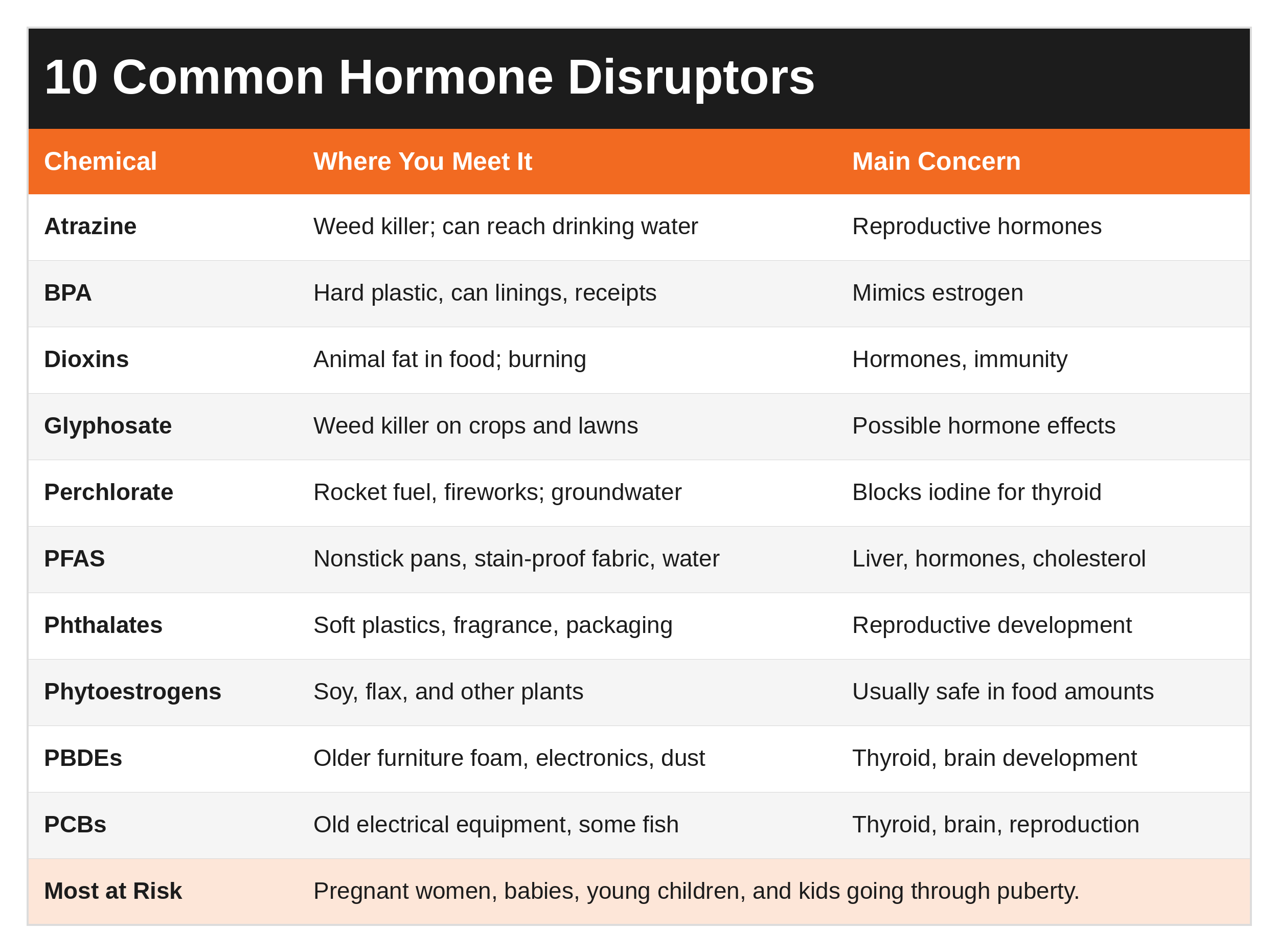
1. Atrazine
Found in: Widely used herbicide for crops like corn, sorghum, and sugarcane. It can run off fields into rivers and groundwater, which makes drinking water a common source.
Health concerns: Atrazine has been linked to disruptions in the reproductive system, including delayed puberty and altered ovarian function, in animal studies.
Status: The European Union stopped allowing it in 2004 because of groundwater contamination. It's still widely used in the U.S. If you drink from a private well near farmland, get your water tested.
2. Bisphenol A (BPA)
Found in: Polycarbonate plastics and epoxy resins; commonly in food and beverage containers, and the lining of canned goods. It's also used to coat many paper receipts.
Health concerns: BPA can mimic estrogen, potentially leading to hormonal imbalances and associated health effects.
Status: The FDA banned BPA in baby bottles and sippy cups in 2012 and in infant formula packaging in 2013. The European Union went further in December 2024, banning it in food contact materials. It's still allowed in other food packaging in the U.S.
"BPA-free" isn't always better. Many companies replaced BPA with close cousins like BPS and BPF, which early research suggests may act on hormones in similar ways. The best choice isn't a different plastic. It's glass, stainless steel, or ceramic for anything you eat or drink from often.
3. Dioxins
Found in: Byproducts of industrial processes like herbicide production and paper bleaching; also released during waste burning and wildfires. The World Health Organization reports that more than 90 percent of human exposure comes through food, mainly the fat in meat, dairy, and fish.
Health concerns: Exposure to dioxins can lead to reproductive and developmental problems, immune system damage, and interference with hormones.
Simple step: Trim visible fat from meat, vary your protein sources, and never burn trash or treated wood at home.
4. Glyphosate
Found in: Broad-spectrum herbicide used in agriculture and residential weed control. It's the active ingredient in Roundup, and residues show up on some grains, oats, and beans.
Health concerns: Some studies suggest glyphosate may disrupt endocrine functions, particularly affecting reproductive hormones. A 2020 review found it shows several key traits of an endocrine disruptor, mostly in lab and animal research. The World Health Organization's cancer agency calls it "probably carcinogenic to humans," while the EPA says it's not likely to cause cancer at normal exposures. The science is still debated.
Simple step: Buy organic oats, grains, and beans. Glyphosate isn't allowed on certified organic crops.
5. Perchlorate
Found in: Industrial chemicals used in rocket fuel, explosives, and fireworks; can contaminate groundwater. It also occurs naturally in some dry soils, including parts of the Southwest.
Health concerns: Perchlorate can impair thyroid hormone production by inhibiting iodide uptake, essential for thyroid function. This matters most for pregnant women and babies, because thyroid hormone drives brain development.
Status (October 2026): After a court order, the EPA proposed the first national drinking water limit for perchlorate in January 2026. It isn't final. A reverse osmosis filter is one of the few home options that reduces it.
6. Per- and Polyfluoroalkyl Substances (PFAS)
Found in: Industrial applications, including firefighting foam, nonstick cookware, and water-repellent fabrics. Also stain-resistant carpet, grease-resistant food packaging, some cosmetics, and drinking water.
Health concerns: PFAS exposure is associated with liver toxicity, reproductive disorders, and interference with hormone regulation. They're also linked to high cholesterol and lower vaccine response. They're called "forever chemicals" because they break down so slowly; some stay in the body for years.
Status (October 2026): In 2024, the EPA set the first national tap water limits for PFAS. In May 2026, it proposed keeping the limits for the two most common types but pushing the deadline for water systems from 2029 to 2031. Your tap water may not have to meet these limits for years. A certified home filter is your fastest option.
7. Phthalates
Found in: Plasticizers (additive to make plastic more pliable) in products like food packaging, cosmetics, fragrances, children's toys, and medical devices.
Health concerns: Phthalates are linked to reproductive, neurological, and developmental issues, including fertility problems and hormonal imbalances. Fast food and highly processed foods are a major source, because phthalates move from tubing and packaging into fatty foods. One more reason to cook at home.
8. Phytoestrogens
Found in: Naturally occurring compounds in plants like soy; mimic estrogen in the body.
Health concerns: While they have potential health benefits, excessive intake of phytoestrogens may disrupt endocrine function and affect reproductive health. The key word is excessive. Current research considers soy foods in normal amounts safe for most people. The bigger concern is concentrated supplements. If you have a thyroid condition or a history of hormone-sensitive cancer, talk with your doctor.
9. Polybrominated Diphenyl Ethers (PBDEs)
Found in: Flame retardants used in furniture foam, electronics, and textiles. U.S. makers phased out the main types by 2013, but they're still in older couches, mattresses, carpet padding, and household dust.
Health concerns: PBDEs can disrupt thyroid hormone levels, impacting brain development and potentially leading to neurodevelopmental issues.
Simple step: Dust with a damp cloth, vacuum with a True HEPA vacuum, and wash kids' hands before they eat.
10. Polychlorinated Biphenyls (PCBs)
Found in: Formerly used in electrical equipment, hydraulic fluids, and plasticizers; production banned in many countries. U.S. production was banned in 1979, but PCBs last for decades. Today the main sources are some fish from contaminated waters and old buildings.
Health concerns: PCBs can interfere with reproductive and thyroid hormones, leading to developmental and neurological problems.
Simple step: Check your state's fish advisories before eating fish you catch yourself.
Minimizing exposure to these EDCs involves being mindful of product choices, opting for alternatives free from harmful chemicals, and supporting policies aimed at reducing environmental contamination.
Where the Rules Stand
Some progress has been made, but many of the limits that would protect your family are proposed, delayed, or years away. Here's a quick look at where things stand.
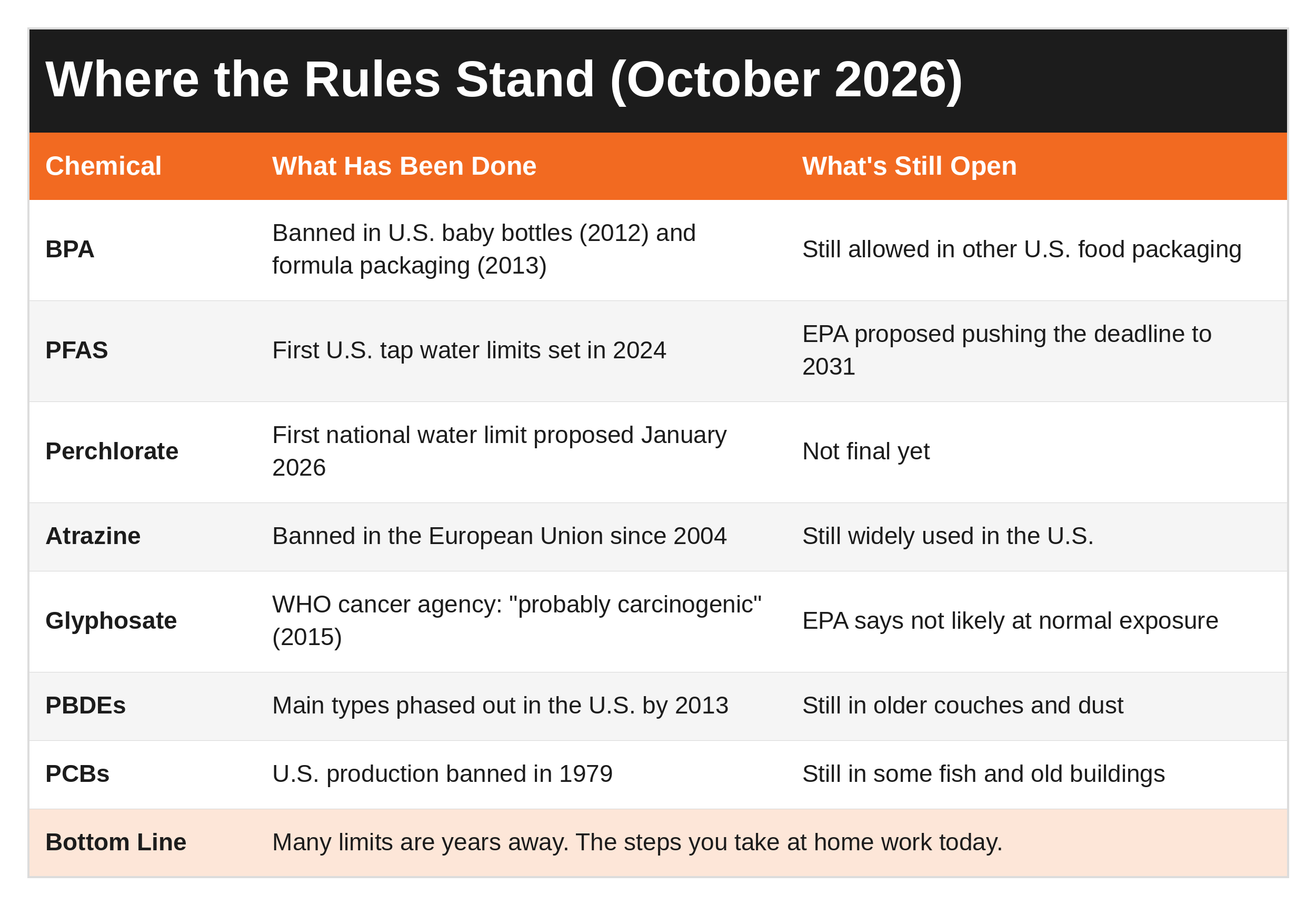
Don't wait for the rules to catch up. The steps below work today.
The free Toxic Chemicals at a Glance helps you spot hormone disruptors and other chemicals on the label, plus apps that do the first check for you. Get it free here.
How to Cut Your Family's Exposure
You can't avoid these chemicals completely. But you can cut your exposure a lot, starting this week.
Start with the top three rows.
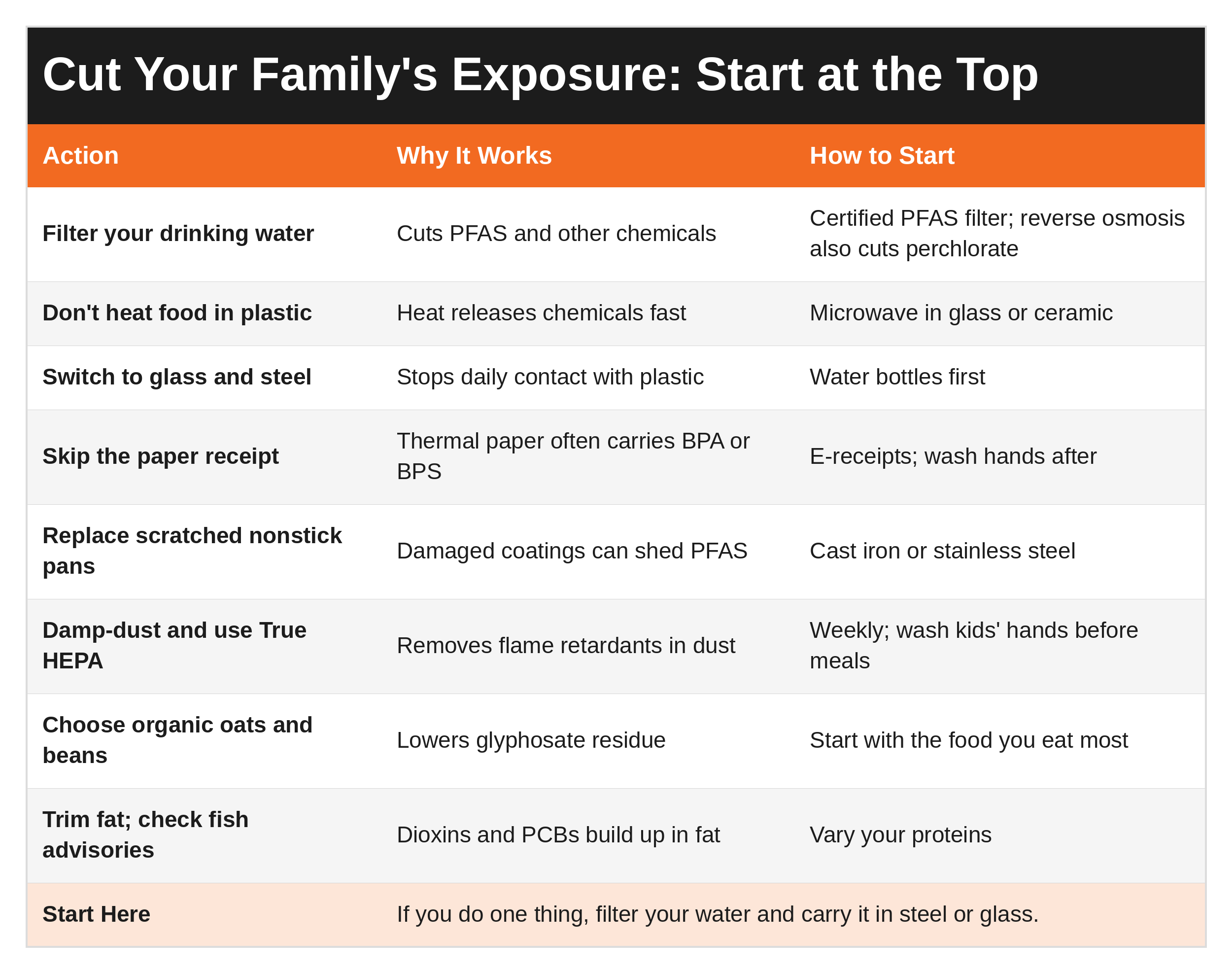
If you only do one thing, filter your drinking water and carry it in a steel or glass bottle. It cuts PFAS and several other chemicals at the same time.
Your Emergency Supplies and Hormone Disruptors
Preparedness and plastic overlap. The CDC calls commercially bottled water the safest emergency water supply, and food-grade plastic containers are the most practical way to store large amounts. That's the right call for emergencies. Canned food, a pantry staple, often has a plastic lining too.
Here's how to keep your emergency supply safe without giving it up:
Store water cool and dark. Heat speeds up chemicals moving from plastic into water. Here in Arizona, that means never in a hot garage, shed, or car.
Rotate on schedule. New water and food go to the back, older supplies move to the front, and you use from the front.
Don't heat food in the can or in plastic. Pour it into a pot or a glass or ceramic dish first.
Day to day, drink filtered tap water from glass or steel, and save the bottled water for emergencies.
Use plastic where it keeps your family safe, and skip it everywhere else.
You can't avoid every hormone disruptor, and you don't have to. The free Toxic Chemicals at a Glance helps you spot the chemicals to avoid in food and household products, plus apps that do the first check for you.
Ask Yourself
Where does most of my family's exposure come from: our water, our food containers, or our home?
Do I heat or store hot food in plastic out of habit?
Is my water filter certified for PFAS, or does it just claim to remove "contaminants"?
Is my emergency water stored somewhere cool, or is it baking in the garage?
Remember
You can't avoid every hormone disruptor, and you don't have to. Filter your water, keep plastic away from heat, and choose glass and steel. Those few habits lower your family's exposure every single day.
Coming Up in Part 6: Microplastics
In Part 6, we'll look at microplastics: where these tiny particles come from, how they get into your family's food and water, and what you can do to cut them down.
Next in the series: Toxic Chemicals to Avoid- Part 6: Microplastics
Get Started Today
Get the free Toxic Chemicals at a Glance. Spot the chemicals to avoid in food and household products, plus apps that do the first check for you. Get it free here.
Quick Answers
What are endocrine disruptors?
Endocrine disruptors are natural or man-made chemicals that can mimic, block, or change the hormones that run your metabolism, growth, fertility, sleep, and mood. The Endocrine Society says more than 1,000 chemicals could act this way.
Who is most at risk from hormone-disrupting chemicals?
Hormones matter most during fast growth and change: pregnancy, infancy, childhood, and puberty. That's why these steps matter most for families with young children and anyone who is pregnant or planning to be.
Is BPA-free plastic safe?
Not always. Many companies replaced BPA with close cousins like BPS and BPF, which early research suggests may act on hormones in similar ways. For anything you eat or drink from often, glass, stainless steel, or ceramic is the better choice.
What's the single best way to cut my family's exposure?
Filter your drinking water with a filter certified for PFAS and carry it in a steel or glass bottle. It cuts PFAS and several other chemicals at the same time. Keep plastic away from heat, too.
Go Deeper
Coming soon: The Family Nutrition Manual, Volume 2: What to Limit and Avoid. This series covers each topic on its own. Volume 2 brings it all together in one place: ultra-processed foods, sugar, artificial sweeteners, seed oils, additives and dyes, caffeine and alcohol, how to read a label and shop smart on a budget, and the chemicals hiding in your home.
Tools I recommend: For the food storage containers I recommend, see my Emergency Food Amazon store, and for water filters and water storage, my Water Amazon store.
The Full Series
Toxic Chemicals to Avoid- Part 1: Reading Labels and Food Additives to Avoid
Toxic Chemicals to Avoid- Part 2: Artificial Sweeteners and the GRAS Loophole
Toxic Chemicals to Avoid- Part 4: Chemicals in Personal Care Products
Toxic Chemicals to Avoid- Part 7: Tools Like Yuka That Do the Work for You
Related Reading
Toxic Chemicals to Avoid- Part 4: Chemicals in Personal Care Products
Safe Drinking Water- Part 3: Filters, Purifiers, and Water Trends
References
Endocrine Society. Endocrine-Disrupting Chemicals (EDCs): patient and public resources.
National Institute of Environmental Health Sciences. Endocrine Disruptors.
U.S. Food and Drug Administration. Bisphenol A (BPA): Use in Food Contact Application.
European Commission. Regulation (EU) 2024/3190 on bisphenol A and other bisphenols in food contact materials. December 2024.
World Health Organization. Dioxins and their effects on human health: fact sheet.
Muñoz JP, Bleak TC, Calaf GM. Glyphosate and the key characteristics of an endocrine disruptor: a review. Chemosphere, 2020. https://pmc.ncbi.nlm.nih.gov/articles/PMC8006305/
International Agency for Research on Cancer. Monograph Volume 112: glyphosate. 2015.
Water Conditioning and Purification. EPA proposes national drinking water standard for perchlorate. January 14, 2026. https://wcponline.com/2026/01/14/epa-proposes-national-drinking-water-standard-for-perchlorate/
Mokra K. Endocrine disruptor potential of short- and long-chain perfluoroalkyl substances (PFASs). International Journal of Molecular Sciences, 2021. https://pmc.ncbi.nlm.nih.gov/articles/PMC7926449/
WaterWorld. EPA proposes PFAS rule changes while preserving PFOA and PFOS drinking water limits. 2026. https://www.waterworld.com/drinking-water-treatment/pfas/news/55378480/epa-proposes-pfas-rule-changes-while-preserving-pfoa-and-pfos-drinking-water-limits
U.S. Environmental Protection Agency. Polychlorinated Biphenyls (PCBs) and Polybrominated Diphenyl Ethers (PBDEs): background and phase-out.
Centers for Disease Control and Prevention. Creating and Storing an Emergency Water Supply.
Disclaimer
This article is for general informational and educational purposes only. It is not medical advice. If you're pregnant, have a thyroid or hormone condition, or have questions about your exposure, talk with your doctor. Affiliate disclosure: I've linked to products from my Amazon store that I personally recommend. As an Amazon Associate, I earn from qualifying purchases, at no extra cost to you. Thank you for supporting my work.
If someone swallows a chemical or has trouble breathing after exposure, call 911 or Poison Control at 1-800-222-1222.
Awareness gives you time. Time gives you options.
The Prepared Protector is someone who's decided that loving someone means being ready for them, not just hoping things go fine.
Prepared Not Paranoid. Protecting the Most Vulnerable Among Us.