Building a Kit You'll Actually Use
By Larry Betz | Prepared Not Paranoid https://www.preparednotparanoid.com/
Most first aid kits are a box of bandages and hope. They sit in a closet until someone slices a finger while cooking, and then you find three bandages, a dried-out ointment, and nothing for the burn. You'll use your first aid kit far more often than any other piece of preparedness gear, so it's worth getting right. Here are the first aid kit essentials I keep in every kit, and how to use them for the injuries you're most likely to face.
In the Introduction, I explained why I build my own kits. Building your own lets you know exactly what you have, where it is, and how to restock it. This post walks through what goes inside. Part 3 covers medications.
Antiseptics and Wound Prep
Rescue Essentials offers a Topical Treatments and Wound Prep Module designed for first aid and wound care. It includes:
Povidone Iodine Prep Pads (6): Antiseptic pads for cleaning the skin around minor cuts, scrapes, and burns to help prevent infection.
Triple Antibiotic Ointment (6): Contains bacitracin, neomycin, and polymyxin B to help prevent infection in minor wounds.
1% Hydrocortisone Cream (6): A mild steroid cream for itching, redness, and swelling from skin irritation, insect bites, and rashes.
The module also contains:
Alcohol Prep Pads (12): For cleaning intact skin and tools. They're not meant for deep open wounds.
Benzalkonium Chloride (BZK) Antiseptic Towelettes (12): Gentle wipes for cleaning minor cuts and scrapes.
Antimicrobial Alcohol Gel Wipes (12): For sanitizing hands and skin when soap and water aren't available.
Sting Relief Pads (6): A topical numbing agent for quick relief from insect stings and bites.
Add these to round it out:
Hand sanitizer: Clean hands before and after you treat anyone.
Sterile saline wound wash: For flushing dirt and debris out of a cut or scrape. Clean water works too.
A quick note on cleaning a wound: Rinse the wound itself with clean water or saline. Save the alcohol pads, iodine, and hydrogen peroxide for the skin around the wound. Used inside an open cut, they can damage tissue and slow healing.
Ointments and Relief
Triple antibiotic ointment (like Neosporin) for minor cuts and scrapes. Some people are allergic to neomycin, one of its ingredients. If you notice a red, itchy rash after using it, switch to plain petroleum jelly.
Hydrocortisone cream (like Cortizone-10) for itching, mild rashes, and bug bites.
Sting relief pads for insect stings and bites.
Petroleum jelly (like Vaseline or Aquaphor) to keep a wound moist so it heals better, and to protect irritated skin.
Anti-chafe or barrier ointment (like Body Glide or Desitin) for hiking, long walks, and travel.
Burn Care
In addition to the topicals above, I recommend adding a Burn Gel Dressing (4" x 4") from Redicare, so you're prepared for minor burns. It cools the burn and protects it in one step.
Burns, the important rules:
Use cooling and burn dressings for minor burns only.
Don't put ice directly on a burn, and skip the butter or home remedies.
Call 911 for serious burns, airway burns, electrical burns, chemical burns, and burns on the face or genitals.
With these additions, your kit goes beyond what most pre-made kits include, and you can handle a much wider range of situations.
An Assortment of Bandages
Bandages aren't exciting, but they're what you'll use the most. The key is variety. A package of 100 assorted bandages from Lighting X lets you stock your kits and still have supplies on hand to restock as you use them:
1" x 3" Standard Bandage (70)
0.75" x 3" Medium Bandage (18)
1.75" x 2" Fingertip Bandage (4)
1.5" x 3" Knuckle Bandage (4)
2" x 3.75" XL Bandage (4)
Add these dressings for bigger cuts and scrapes:
Butterfly closures or Steri-Strips to hold the edges of a small, clean cut together
Non-adherent pads that won't stick to a wound or burn
Roll gauze to hold dressings in place
What to Do: Cuts, Scrapes and Burns
Having the gear is half the job. Knowing what to do with it is the other half. Here's the whole process on one page.
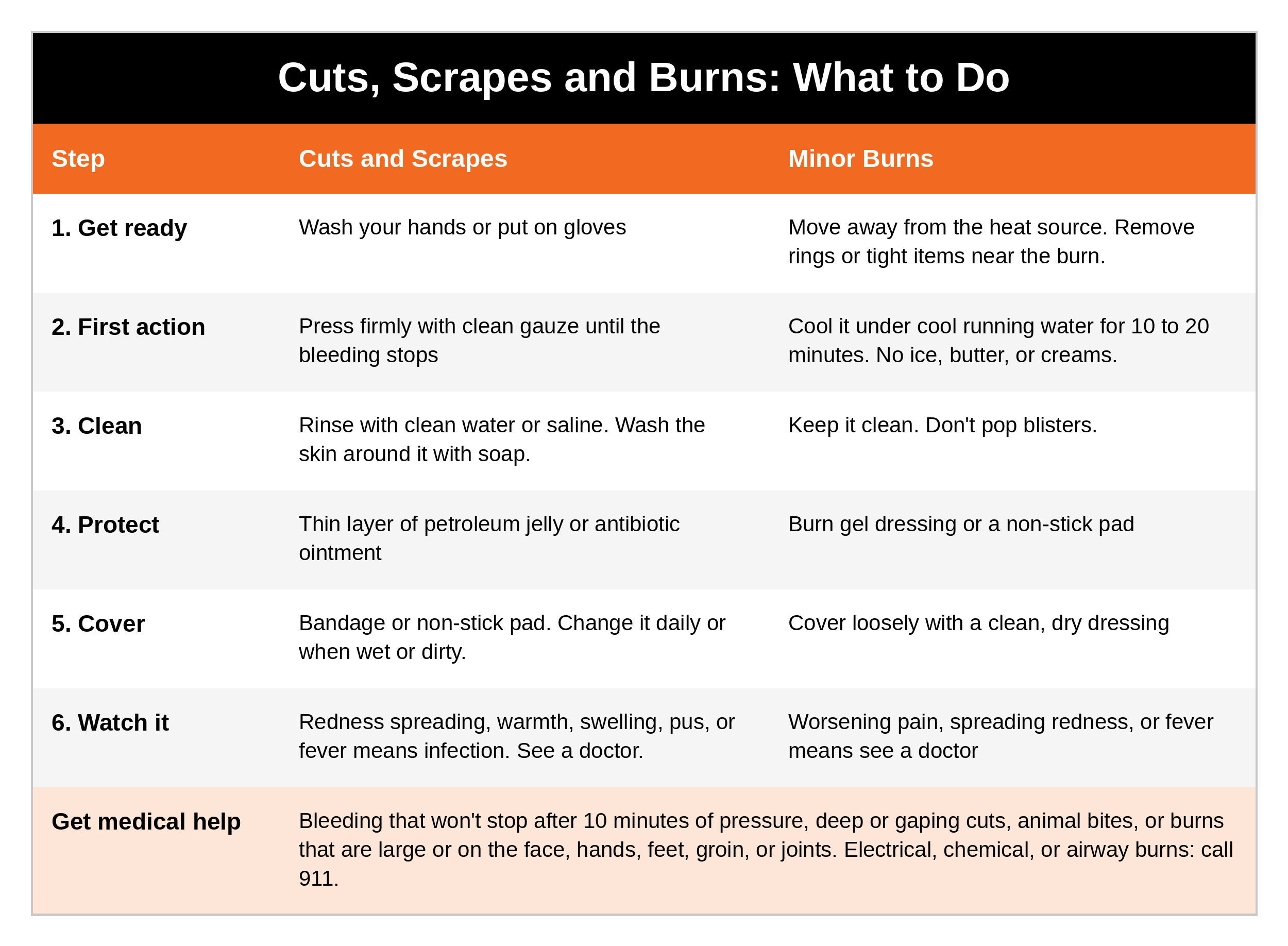
Minor wound care, in short:
Clean the wound.
Control bleeding.
Apply the right dressing or bandage.
Change dressings as needed.
Watch for signs of infection.
Stay current on tetanus. If a wound is deep or dirty and it's been more than 5 years since your last tetanus shot, check with your doctor.
Storage
If you build a comprehensive first aid kit, I highly recommend using storage tins or small organizers to keep your gear neatly arranged. Good organization means you can find what you need quickly, even under stress, and see at a glance what needs restocking.
Build kits for where you are:
Home: your most complete kit, in the kitchen or another easy-to-reach spot
Car: a solid kit that can handle the road and the trip
Go bag and travel bag: smaller, but with the essentials
Check every kit twice a year. Replace anything used, expired, or damaged, and make sure adhesive bandages still stick. Heat breaks supplies down faster, so check car kits more often in hot climates.
Pro Travel Tip
When you put together a travel first aid kit, there are a few extra things worth adding. One of the most frustrating travel experiences is dealing with flight delays or ending up in an unfamiliar city when you urgently need a pharmacy. That's happened to me several times, so I started carrying a small, dedicated feminine hygiene essentials kit in my vehicle and travel bag. It includes tampons, pads, wipes, tissues, and cranberry pills, items that can be hard to find quickly when you need them.
In addition to standard first aid supplies, I've added:
Small scissors and tweezers for minor cuts, splinters, and bandage adjustments
An eyeglass repair kit for unexpected fixes
Travel-sized duct tape and medical tape for quick repairs or wound care
LMNT electrolyte powder to stay hydrated, especially after long flights, during illness, or in hot climates where dehydration is a risk
My Medic ZZips, a compact, easy-to-use alternative to traditional stitches, for closing a cut when medical care isn't immediately available. They're for clean, straight cuts. Deep, dirty, or gaping wounds and animal bites still need a doctor.
If you're traveling overseas, also pack water purification tablets and any essential medications you rely on, since they may be hard to find in some parts of the world. Not every water filter is enough overseas. Most travel filters don’t stop viruses, so you’ll want a true purifier or chlorine dioxide tablets. I cover exactly what to pack, plus the hidden water traps like ice and brushing your teeth, in Safe Drinking Water, Part 5: Safe Drinking Water When You Travel Abroad.
The equipment above gives you a solid foundation, but every situation may call for additional or specialized gear. Hiking or camping may call for extra supplies for outdoor injuries. Overlanding, boating, or extreme weather may need specific medical equipment. The key is to assess your environment, anticipate the risks, and make sure you have the right tools for the situation.
Additional Everyday Essentials
These round out a kit you can actually live with:
Personal prescription medications, plus a backup prescription list with names and doses
Electrolyte powder and water purification tablets
Thermometer
Instant cold pack for sprains and bumps
Small flashlight
Medical tape and duct tape
Notebook, pen, and permanent marker
Write it down. In an emergency, keep a quick record of any medication given, the time it was given, symptoms you observe, allergies, and emergency contacts. It helps doctors and EMS, and it keeps you from doubling a dose.
Want it all on paper? The Family Safety Toolkit gives you ready-to-use checklists you can print, check off, and keep with your kits.
Want a one-page version to keep with your kits? The free First Aid and Trauma Guide puts what to keep on hand and what to do first on one page, so you can act fast when someone is hurt.
Ask Yourself
Do I know what's actually in my first aid kit, and could I find the burn dressing in the dark?
Is anything in my kit expired, dried out, or used up?
Do I have a kit in my car and my travel bag, not just at home?
Remember
A first aid kit only helps if it's stocked, organized, and within reach. Clean the wound, control the bleeding, cover it, and watch it. Cool a burn with running water, never ice. Check your kits twice a year.
Coming Up in Part 2: Trauma Kit Essentials
Next, we move from everyday first aid to life-threatening injuries. Part 2 covers tourniquets, wound packing, pressure bandages, chest seals, and where to stage your trauma gear so it is within reach when seconds count.
Next in the series: First Aid and Trauma- Part 2: Trauma Kit Essentials
Get Started Today
Get the free First Aid and Trauma Guide. What to keep on hand and what to know so you can act fast when someone is hurt. Print it and keep it with your kits. Get it free here
Get the free Family Emergency Plan. Write down your meeting spots, emergency contacts, and who in your family needs extra help, so everyone knows the plan before something happens. Get it free here
Quick Answers
What should be in a basic family first aid kit?
Start with antiseptic wipes, antibiotic ointment, hydrocortisone cream, an assortment of adhesive bandages, non-adherent pads, roll gauze, butterfly closures, and a burn gel dressing. Add tweezers, small scissors, medical tape, and any personal medications. Build one for home, one for the car, and a smaller one for your travel bag.
How do you clean a minor cut?
Rinse the wound with clean water or saline. Use alcohol, iodine, or hydrogen peroxide only on the skin around the wound, because inside an open cut they can damage tissue and slow healing. Then control the bleeding, cover it, and watch for signs of infection.
Should you put ice on a burn?
No. Cool a minor burn under cool running water, then cover it with a burn gel or non-adherent dressing. Skip ice, butter, and home remedies, and call 911 for serious, electrical, chemical, or airway burns.
How often should you check a first aid kit?
Check every kit twice a year and replace anything used, expired, or damaged. Heat breaks supplies down faster, so check car kits more often if you live somewhere hot.
Go Deeper
The Family Safety Toolkit. 20 ready-to-use checklists for kids, travel, home, and emergencies, so your family has the steps in front of you instead of trying to remember them under stress.
Coming soon: The Family Emergency Preparedness Manual. The blog series cover each topic on its own. The Manual connects your vehicle, go bags, first aid, backup power, and communications into one family plan, with the worksheets, checklists, and drills you won't find on the blog.
Tools I recommend: The first aid kits, trauma gear, and medical supplies I recommend are in my Amazon store: First Aid, Travel Safety, and Everyday Carry.
The Full Series
First Aid and Trauma, Introduction- First Aid vs Trauma Care
First Aid and Trauma- Part 3: Medications Every Kit Should Have
First Aid and Trauma- Part 5: Kits for Kids, Seniors and Caregivers
Related Reading
Go Bag and Emergency Bug-Out Bag- Part 4: Documents, Cash and Medications
Safe Drinking Water- Part 5: Safe Drinking Water When You Travel Abroad
Setting Up Your Mobile Command Center- Part 3: Essential Safety Equipment
References
American Academy of Dermatology. How to treat minor cuts.
Mayo Clinic. Cuts and scrapes: First aid.
Mayo Clinic. Burns: First aid.
American Red Cross. Burns first aid.
Centers for Disease Control and Prevention. Tetanus: vaccine recommendations for wound care.
Disclaimer
These suggestions are intended to help you and your family build awareness, confidence, and safer decision-making habits. No safety plan, checklist, or training can guarantee 100% protection. This article is for general informational and educational purposes only. It is not medical advice and is not a substitute for hands-on first aid training or care from a medical professional. Affiliate disclosure: I've linked to products from my Amazon store that I personally recommend. As an Amazon Associate, I earn from qualifying purchases, at no extra cost to you. Thank you for supporting my work.
For serious bleeding, severe burns, or any medical emergency, call 911.
Awareness gives you time. Time gives you options.
The Prepared Protector is someone who's decided that loving someone means being ready for them, not just hoping things go fine.
Prepared Not Paranoid. Protecting the Most Vulnerable Among Us.