Nutrition Basics- Part 5: Omega-3, 6, and 9
Getting the Balance Right
By Larry Betz | Prepared Not Paranoid https://www.preparednotparanoid.com/
You've seen the word "omega" on fish oil bottles, egg cartons, and even cereal boxes. But what do omega-3, omega-6, and omega-9 actually mean, and does your family need to worry about them?
Here's the short answer. Most families are out of balance. The typical American diet is heavy on omega-6 fats from processed seed oils and packaged foods, and light on the omega-3 fats from fish, flax, chia, and walnuts. That imbalance can tip your body toward inflammation, and inflammation is tied to a long list of chronic health problems.
The good news? The fix isn't complicated. And many of the best omega-3 foods, like canned salmon, sardines, chia seeds, and walnuts, also happen to be excellent emergency pantry foods.
In Part 4, we covered which fats to cook with, buy, and store. This post covers the omegas.
Which Fatty Acid Is Best for a Healthy Body, and What's the Difference?
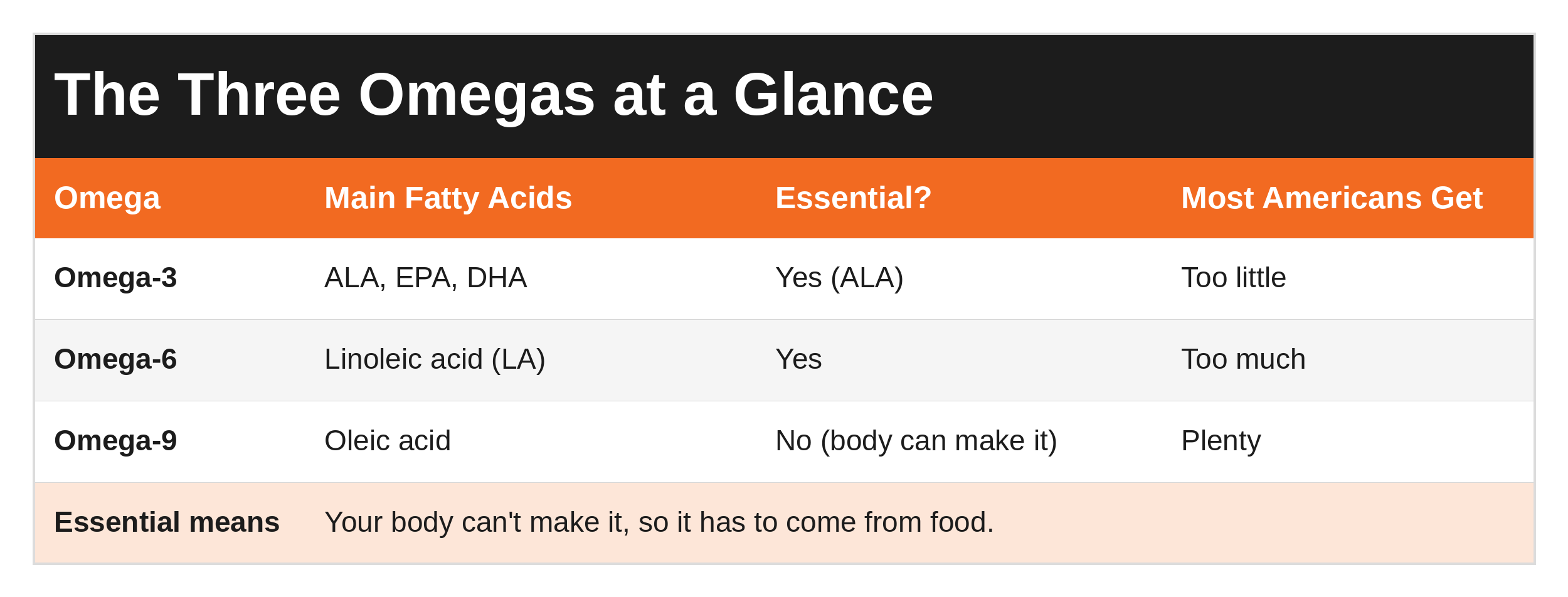
The differences between fatty acids come down to tiny molecular variations. Each fatty acid works wonders in its own unique way, which is why it is best not to think about one being better than the other. A good balance of all three is optimal for health.
Here's the quick version.
Omega-3 Fatty Acids
Omega-3 fatty acids are among the most important fats for human health. They are best known for their ability to calm inflammation, which plays a role in many chronic and degenerative diseases, including heart disease, arthritis, and cognitive decline. There are three main types of omega-3s:
Alpha-Linolenic Acid (ALA), found in plant-based sources
Eicosapentaenoic Acid (EPA) and Docosahexaenoic Acid (DHA), found mainly in marine sources
ALA is considered an essential fatty acid, meaning the body cannot produce it on its own; it must come from the diet. While ALA can be converted into EPA and DHA, this conversion is inefficient, which is why it's important to consume EPA and DHA directly when possible. These two forms are especially powerful in reducing inflammation, supporting heart and brain health, and maintaining cellular function. DHA is especially important during pregnancy, breastfeeding, and early childhood for a baby's brain and eye development.
Unfortunately, these omega-3s, especially EPA and DHA, are the most lacking in the standard Western diet, which tends to be overloaded with omega-6 fats from processed seed oils.
Food Sources of Omega-3s
ALA: Flaxseeds, chia seeds, hemp seeds, walnuts, and their oils
EPA and DHA: Fatty cold-water fish like salmon, sardines, Atlantic mackerel, herring, trout, and anchovies; also available in fish oil and algae oil supplements
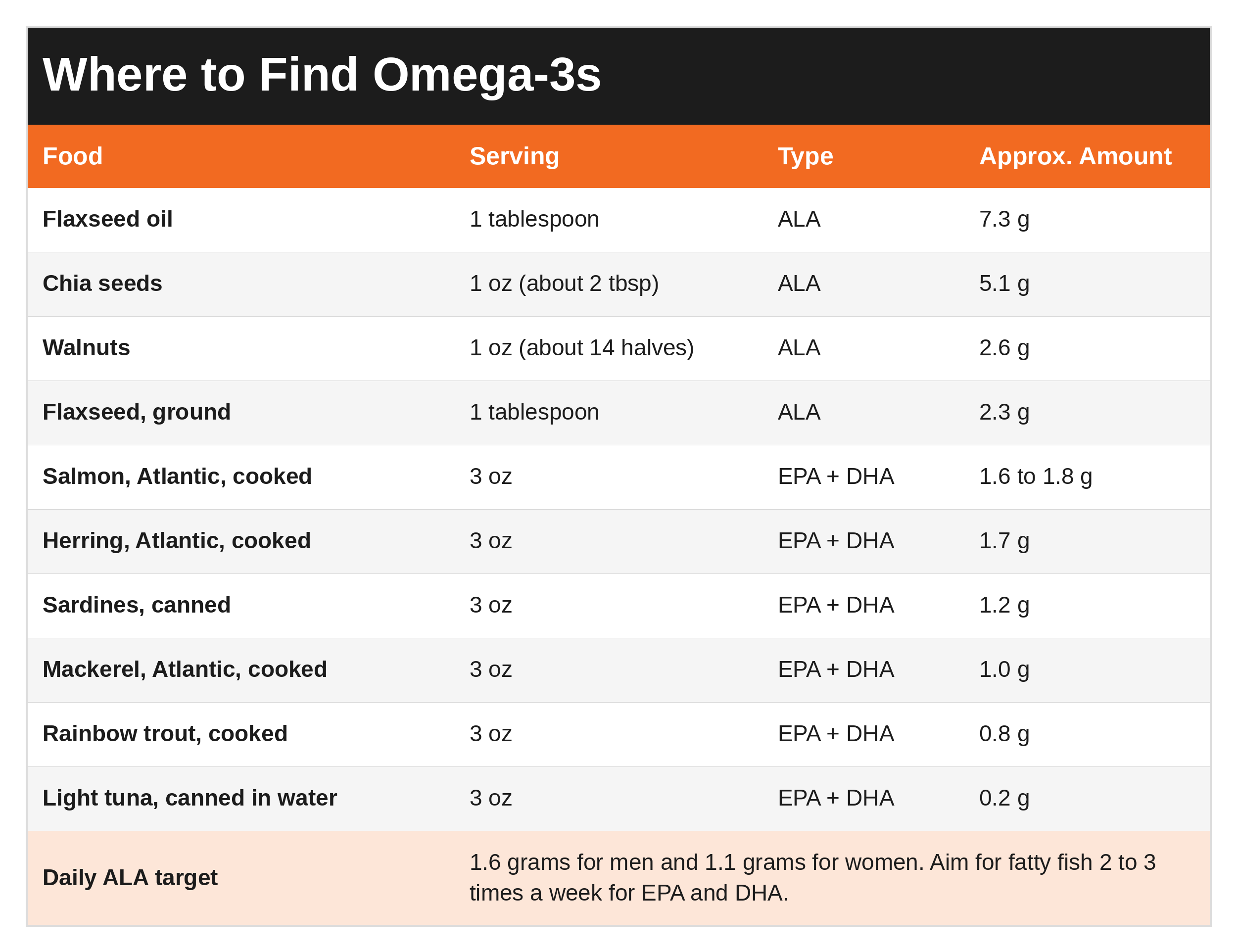
To support long-term health and reduce inflammation, aim to include fatty fish 2 to 3 times per week and incorporate plant-based sources of ALA daily.
Choose low-mercury fish. The FDA and EPA list salmon, sardines, herring, anchovies, trout, Atlantic mackerel, and canned light tuna among the best (lowest mercury) choices. Avoid king mackerel, shark, swordfish, tilefish from the Gulf of Mexico, bigeye tuna, marlin, and orange roughy. Note the difference: Atlantic mackerel is a best choice, but king mackerel is on the avoid list. This matters most for pregnant or breastfeeding women and young children.
Omega-6 Fatty Acids
Omega-6 fatty acids belong to the same polyunsaturated fat family as omega-3s, and they are also essential for health. The primary omega-6 fatty acid is Linoleic Acid (LA), which the body cannot produce and must obtain through food. However, unlike omega-3s which most people don't get enough of, the typical Western diet provides far too many omega-6s, largely due to the widespread use of vegetable oils like soybean, sunflower, safflower, corn, and canola oil in processed and packaged foods.
While omega-6s are not inherently bad, balance is key. LA can promote inflammation if consumed in excess, especially in the absence of adequate omega-3s. This imbalance, common in many modern diets, can contribute to chronic inflammation, which is linked to serious health conditions such as heart disease, type 2 diabetes, arthritis, and Alzheimer's.
Common Sources of Omega-6s
Refined vegetable oils: soybean oil, sunflower oil, corn oil, canola oil, and anything labeled simply "vegetable oil"
Packaged snack foods, salad dressings, mayonnaise, fried foods, and margarine
Some nuts and seeds (e.g., peanuts, pumpkin seeds), though these also contain beneficial nutrients
To support better health, aim to reduce intake of processed foods and refined oils, and prioritize cooking with healthier fats like olive oil, avocado oil, or ghee. At the same time, increase omega-3 intake to restore a more optimal balance and help reduce systemic inflammation.
The science debate (checked October 2026): You'll hear strong opinions on seed oils from both sides. The American Heart Association's position is that omega-6 fats, eaten in place of saturated fat, are not harmful to the heart. Other researchers point to the huge rise in seed oil use over the past century and argue that the ratio of omega-6 to omega-3 matters. Estimates put the modern Western ratio around 15 to 1 or higher, far above traditional diets. Here's where nearly everyone agrees: most Americans need more omega-3s, and cutting back on ultra-processed foods, where most refined seed oils hide, is a smart move. That's the approach I take.
Omega-9 Fatty Acids
Omega-9 fatty acids are the most abundant type of fat in nature and in our diets. Unlike omega-3 and omega-6 fats, omega-9s are not considered essential, because the body can produce them from other unsaturated fats when needed. However, that doesn't mean they aren't beneficial. Omega-9s still play important roles in supporting heart health, reducing inflammation, and promoting balanced cholesterol levels.
The most well-known omega-9 is oleic acid, found in olive oil, which is a key component of the heart-healthy Mediterranean diet.
An interesting detail: when the diet is truly short on the essential fats, the body makes extra of a certain omega-9 as a backup. Doctors can even use it as a lab marker for essential fatty acid deficiency. That backup is not a substitute, which is one more reason to get your essential fats from food.
Food Sources of Omega-9s
Extra virgin olive oil
Avocados and avocado oil
Almonds, peanuts, cashews, and macadamia nuts
Olives
Animal fats, such as lard or tallow (in smaller amounts)
While omega-9s are widely available in the diet, choosing high-quality, cold-pressed oils and whole-food sources like avocados, olives, and nuts ensures you're getting these fats in their most health-supportive forms.
What about "high-oleic" oils? You'll see "high-oleic sunflower" or "high-oleic safflower" oil on snack labels. They're bred to be higher in omega-9 and lower in omega-6, so they're a step up from regular seed oils. Most are still refined, though, so at home I stick with olive oil and avocado oil.
Balancing Fatty Acids for Health
All fatty acids hold enormous potential for the body because they are converted into other molecules that perform vital roles in regulating, mediating, inducing, and countering various body functions. It's not that one omega is inherently bad and another good; rather, we need each in the proper proportions. The problem is that the typical American diet includes excessive omega-6s, which, if not balanced by omega-3s, drive up the inflammatory response, leading to numerous health issues over time.
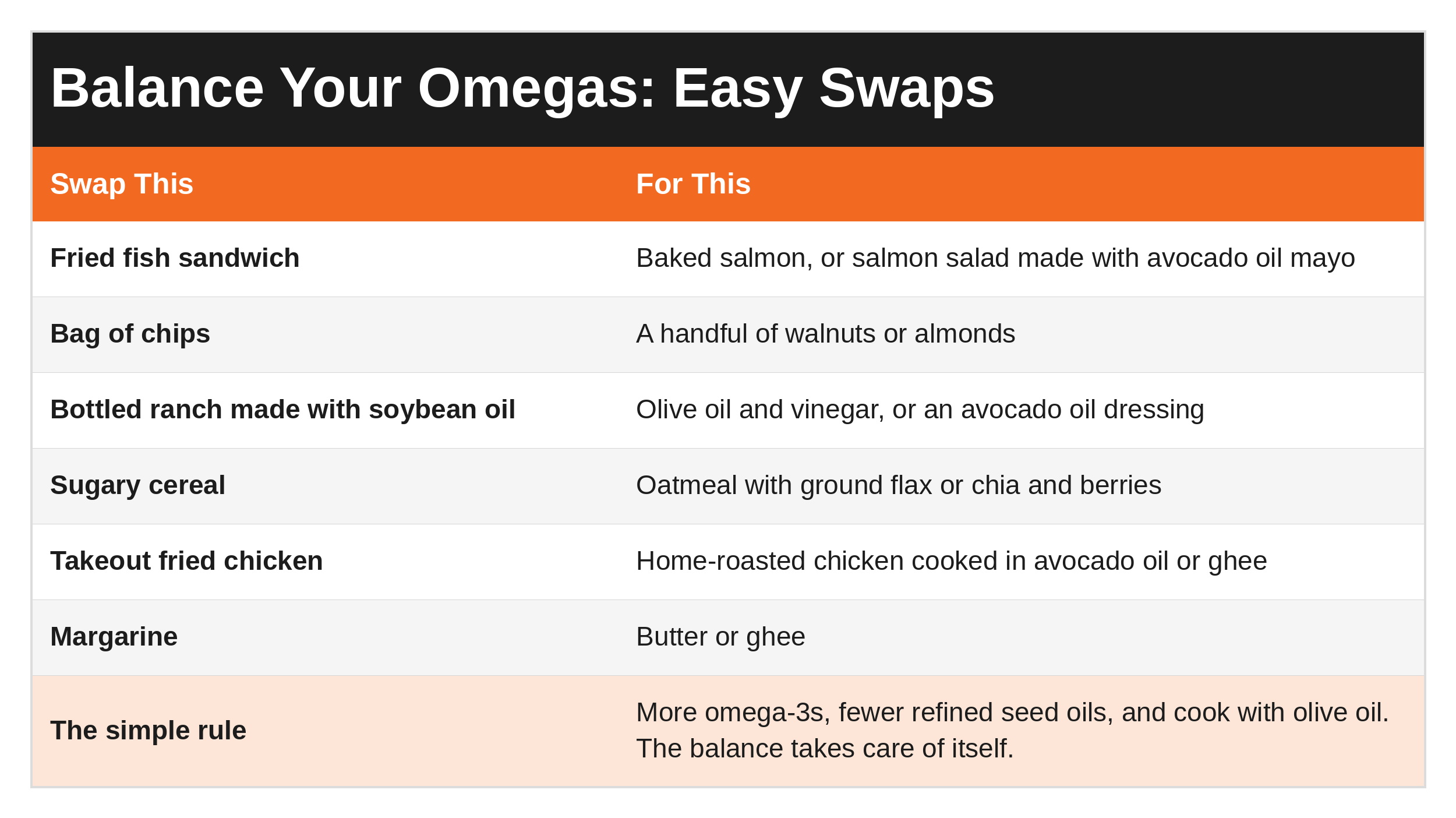
Here's what a balanced week looks like in real life.
Supplements and Dietary Sources
Food comes first, but supplements can help fill the gap. Taking EPA and DHA supplements can help reduce the body's inflammatory responses for many people, especially those who don't eat fish regularly. With inflammation reduced, better health is more readily achieved.
Fish oil or algae oil? Fish oil provides both EPA and DHA and is usually the least expensive. Algae oil provides DHA (some brands add EPA) from the same source fish get it from, and it's a good choice for vegetarians, people who hate fish burps, and people with fish allergies (check with your allergist first). Cod liver oil also contains vitamins A and D, so watch your totals if you take other supplements.
How to read a fish oil label: don't go by the big number on the front. A "1,000 mg fish oil" capsule may contain only 300 mg of actual EPA and DHA. Turn the bottle over and add the EPA and DHA together. Then look for a USP or NSF seal (independent testing for purity and mercury), a best-by date well in the future, and a mild smell. A strong fishy or sour smell usually means it has gone bad.
Before you start a fish oil supplement:
The FDA advises no more than 5 grams per day of EPA and DHA combined from supplements.
High doses can increase bleeding risk, especially with blood thinners like warfarin, and before surgery.
Some large studies have linked omega-3 supplements, especially above 1 gram a day, with a higher risk of atrial fibrillation in people with heart conditions.
If you're pregnant, breastfeeding, have a fish or shellfish allergy, or take medications, talk to your doctor first. For kids, ask your pediatrician about the dose.
Sources of Omega-3, Omega-6, and Omega-9 Fatty Acids
Omega-3 (DHA, EPA, ALA): cold-water fish (salmon, sardines, mackerel), flaxseeds, chia seeds, walnuts, hemp seeds
Omega-6 (linoleic acid): soybean oil, sunflower oil, canola oil, safflower oil
Omega-9 (oleic acid): olive oil, avocados, almonds, peanuts
Omega-3s in Your Emergency Pantry
Omega-3s are the most fragile fats in your kitchen. They go rancid faster than any other fat when exposed to heat, light, and air. But many of the best omega-3 foods are already shelf-stable, need no cooking, and give your family high-quality protein and fat during an outage:
Canned or pouch salmon: EPA and DHA plus protein, no cooking needed
Canned sardines (in olive oil or water): high omega-3, low mercury, very affordable
Canned Atlantic mackerel: rich in omega-3s, mild flavor
Chia seeds: very stable on the shelf; mix with water or milk for an instant pudding
Whole flaxseed: long shelf life; grind small batches as you need them
Walnuts: vacuum-seal or freeze them, and rotate often, because they turn bitter fast
Store smart: keep fish oil in a cool, dark place and refrigerate after opening if the label says to. Keep ground flax and walnuts in the fridge or freezer. And use your rotation rule: new food goes to the back, older food moves to the front, and you eat from the front.
Selection Tips
Remember to choose cold-pressed organic oils. They are the least likely to be damaged by high heat, chemical processing, and the removal of natural antioxidants.
When it comes to the omegas, the simplest rules work best:
Cook with olive oil, avocado oil, butter, ghee, and coconut oil.
Limit refined seed oils and the packaged foods made with them.
Eat fatty, low-mercury fish 2 to 3 times a week.
Add a daily plant omega-3: ground flax, chia, hemp seeds, or walnuts.
By incorporating a balanced mix of these fatty acids into your diet and choosing high-quality sources, you can support your overall health and well-being.
Ask Yourself
How many times did my family eat fatty fish in the past two weeks?
Where is most of our omega-6 coming from: whole nuts and seeds, or packaged and fried foods?
Do I know how much EPA and DHA is in my supplement, or only the number on the front?
Are my walnuts, flax, and fish oil stored where they'll stay fresh?
Remember
No omega is the villain. Most families just need more omega-3s and fewer refined seed oils. Eat fatty fish, add flax or chia, cook with olive oil, and the balance takes care of itself.
Get Started Today
[FREE DOWNLOAD: TO BE CHOSEN AFTER THE BINDER REVIEW]
Go Deeper
The Prepared Not Paranoid Family Nutrition Guide. This post shows you how to balance your omegas. The guide takes it further: the five supplements I keep on hand and how to choose them, an emergency supplement kit, a full chapter on seed oils and where they still hide in your food, how to read every part of a food label, and an emergency pantry plan built around foods your family will actually eat. [Get it here: LINK]
Tools I recommend: The canned fish, chia, flax, and kitchen tools I recommend are in my Amazon store. https://amzn.to/4yM747h
Related reading:
Nutrition Basics, Part 4: Fats and Oils https://www.preparednotparanoid.com/pnp-library/nutrition-lesson-4
Nutrition Basics, Part 6: Phytonutrients https://www.preparednotparanoid.com/pnp-library/nutrition-lesson-6
Nutrition Basics, Part 9: Trans Fats and Seed Oils https://www.preparednotparanoid.com/pnp-library/nutrition-lesson-5
Nutrition Basics, Part 2: Protein https://www.preparednotparanoid.com/pnp-library/nutrition-lesson-2
References
National Institutes of Health, Office of Dietary Supplements. Omega-3 Fatty Acids Fact Sheet. https://ods.od.nih.gov/factsheets/Omega3FattyAcids-HealthProfessional/
Institute of Medicine (National Academies). Dietary Reference Intakes for Energy, Carbohydrate, Fiber, Fat, Fatty Acids, Cholesterol, Protein, and Amino Acids. 2005.
U.S. Food and Drug Administration and U.S. Environmental Protection Agency. Advice About Eating Fish. https://www.fda.gov/food/consumers/advice-about-eating-fish
U.S. Department of Agriculture, Agricultural Research Service. FoodData Central. https://fdc.nal.usda.gov/
American Heart Association. Fish and Omega-3 Fatty Acids. https://www.heart.org/en/healthy-living/healthy-eating/eat-smart/fats/fish-and-omega-3-fatty-acids
Harris WS, et al. Omega-6 Fatty Acids and Risk for Cardiovascular Disease: A Science Advisory From the American Heart Association. Circulation 119(6):902 to 907, 2009.
Simopoulos AP. The importance of the ratio of omega-6/omega-3 essential fatty acids. Biomedicine and Pharmacotherapy 56(8):365 to 379, 2002.
Gencer B, et al. Effect of Long-Term Marine Omega-3 Fatty Acids Supplementation on the Risk of Atrial Fibrillation in Randomized Controlled Trials of Cardiovascular Outcomes. Circulation 144(25):1981 to 1990, 2021.
Disclaimer
This article is for general informational and educational purposes only. It is not medical advice and is not a substitute for guidance from your physician or a registered dietitian. Talk to your doctor before starting fish oil or any supplement, especially if you take blood thinners, have a heart rhythm condition, are pregnant or breastfeeding, have a fish allergy, or have surgery coming up. Affiliate disclosure: I've linked to products from my Amazon store that I personally recommend. As an Amazon Associate, I earn from qualifying purchases, at no extra cost to you. Thank you for supporting my work.
In a medical emergency, call 911.
Awareness gives you time. Time gives you options.
The prepared protector is someone who's decided that loving someone means being ready for them, not just hoping things go fine.
Prepared Not Paranoid. Protecting the Most Vulnerable Among Us.